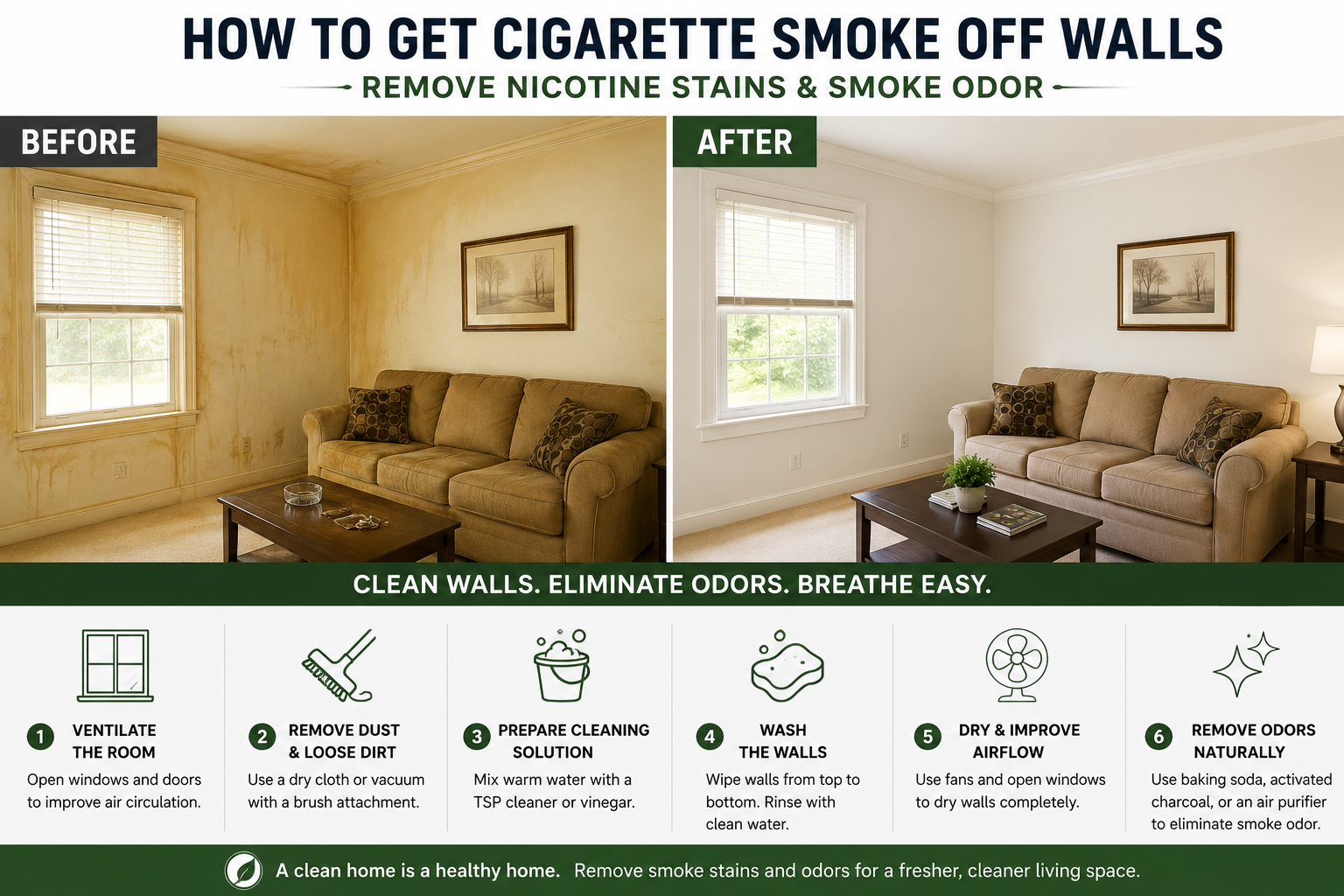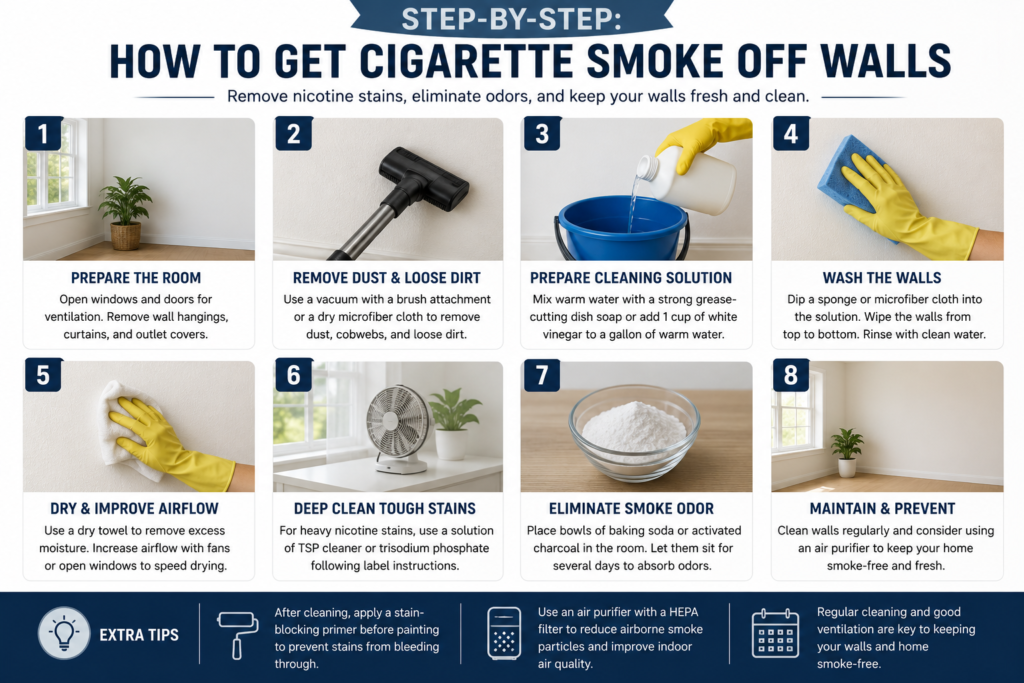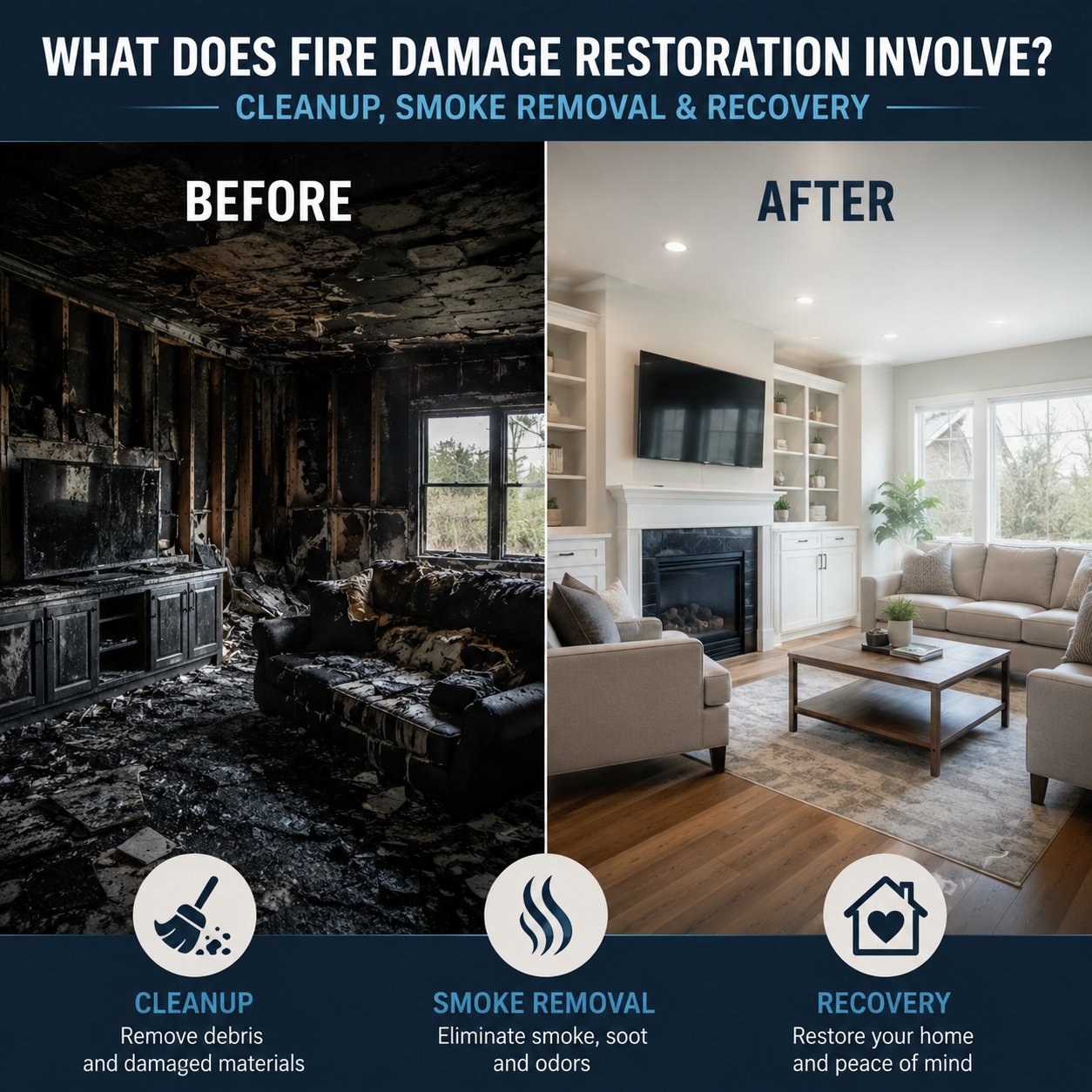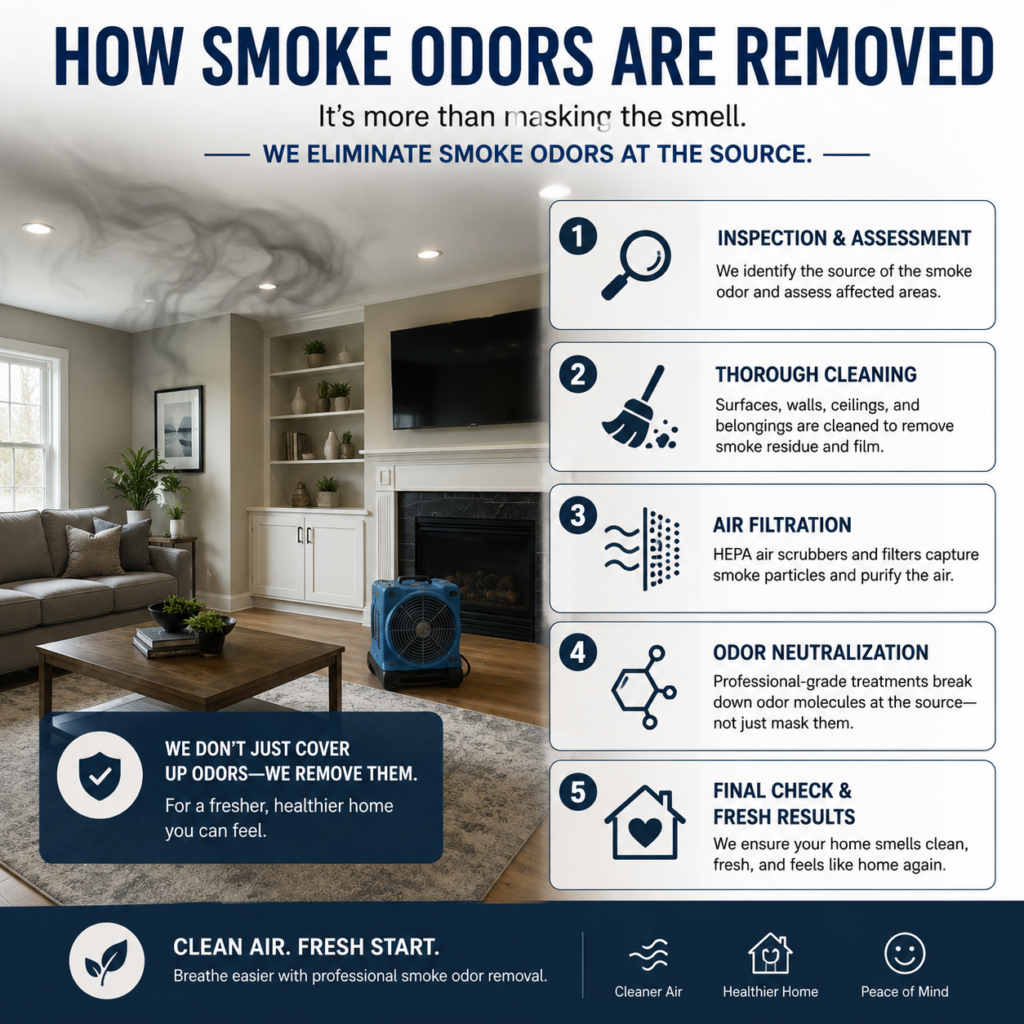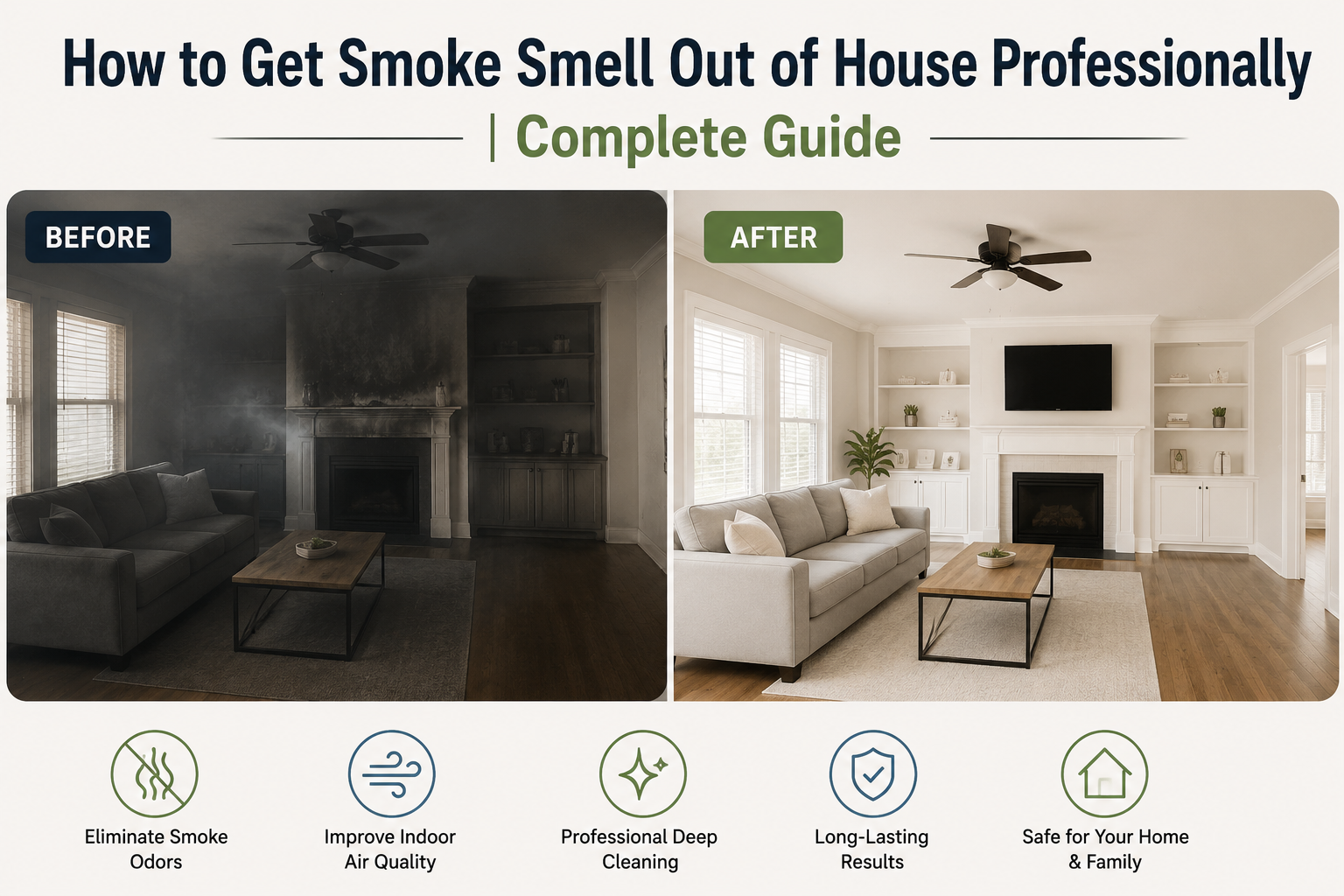
How to get smoke smell out of house professionally involves much more than simply masking unpleasant odors. Professional restoration specialists remove soot and smoke residue, deep-clean affected materials, treat HVAC systems, use advanced air filtration equipment, and apply specialized deodorization methods such as thermal fogging and hydroxyl treatments. These proven techniques target odor-causing particles at their source, helping restore indoor air quality and permanently eliminate lingering smoke smells from the home.
Professionals remove smoke smell by locating contamination sources, cleaning soot and smoke residue, treating affected materials, and using advanced deodorization methods such as thermal fogging, ozone treatment, hydroxyl generators, and HEPA air filtration. These techniques eliminate odor particles rather than simply masking unpleasant smells.
How to Get Smoke Smell Out of House Professionally
Smoke odors can linger long after a fire, cooking accident, or prolonged exposure to cigarette smoke. While household cleaners may temporarily reduce the smell, professional smoke odor removal focuses on eliminating the source of the odor rather than masking it. Restoration professionals use specialized cleaning methods, air filtration equipment, and deodorization treatments to remove smoke particles trapped in surfaces and indoor air.
The professional process typically begins with removing smoke residue from affected areas, followed by deep cleaning, HVAC system treatment, air purification, and advanced deodorization techniques. Together, these steps help restore indoor air quality and remove persistent smoke odors from the home.
Step 1: Remove Soot and Smoke Residue
One of the most important steps in professional smoke odor removal is eliminating soot and smoke residue. Even when a home looks clean, microscopic smoke particles can remain on surfaces and continue releasing unpleasant odors.
Professionals clean affected areas using specialized products designed to break down smoke contamination without spreading residue further. Every affected surface is carefully evaluated and cleaned to prevent lingering odors.
Common areas that require cleaning include:
- Walls and ceilings
- Hardwood and tile floors
- Cabinets and countertops
- Doors and trim
- Furniture surfaces
- Light fixtures and vents
In homes affected by significant smoke damage, professional Soot and Smoke Removal helps eliminate residue that ordinary cleaning methods often leave behind.
Step 2: Deep Clean Smoke-Affected Materials
Smoke odors frequently penetrate porous materials that absorb particles and odors over time. Simply wiping down visible surfaces may not remove contamination trapped within fabrics and soft materials.
Professional restoration teams use specialized cleaning techniques to treat items that have absorbed smoke odors. The cleaning approach depends on the material, the severity of contamination, and the type of smoke involved.
Carpets and Rugs
Carpet fibers can trap smoke particles deep below the surface. Professional extraction and deep-cleaning methods help remove contaminants that standard vacuuming cannot reach.
In severe cases, technicians may evaluate whether cleaning is sufficient or if replacement is the better option.
Upholstery and Furniture
Fabric furniture often absorbs smoke odors quickly. Professional cleaning methods target embedded particles while protecting delicate materials from damage.
This process can help restore sofas, chairs, mattresses, and other upholstered items affected by smoke exposure.
Curtains and Fabrics
Curtains, drapes, bedding, and clothing can hold smoke odors even after multiple washes. Restoration professionals use specialized cleaning methods to remove stubborn odors from fabric materials.
Personal Belongings
Smoke contamination can affect books, photographs, electronics, and household items. Professionals assess which belongings can be restored and use appropriate cleaning techniques to reduce odor transfer throughout the home.
Step 3: Clean the HVAC System
Many homeowners are surprised to learn that smoke odors can continue circulating through the heating and cooling system long after visible damage has been cleaned.
Smoke particles can settle inside:
- Air ducts
- Vent openings
- Air handlers
- HVAC components
- Air filters
When the system runs, trapped particles may be redistributed throughout the home, causing odors to return repeatedly.
Professional HVAC cleaning helps remove contamination from the system and improves overall indoor air quality. Replacing filters and cleaning accessible components are often necessary parts of the smoke odor removal process.
Step 4: Use Professional Air Filtration Equipment
After cleaning visible contamination, restoration professionals focus on removing smoke particles that remain suspended in the air.
Unlike standard household air purifiers, commercial-grade equipment is designed to capture extremely small airborne contaminants and improve indoor air quality more quickly.
HEPA Air Scrubbers
HEPA air scrubbers continuously filter indoor air and capture fine smoke particles. These machines are commonly used during restoration projects to reduce airborne contamination.
Activated Carbon Filters
Activated carbon filters help absorb odor-causing compounds that traditional filters may not remove. They are especially effective for reducing persistent smoke-related odors.
Negative Air Machines
Negative air machines create controlled airflow that helps isolate contaminants and prevent smoke particles from spreading to unaffected areas of the home.
By combining filtration and airflow management, professionals can significantly reduce airborne smoke contamination before moving on to advanced deodorization treatments.
Step 5: Apply Professional Deodorization Treatments
Once smoke residue has been removed and the air has been filtered, professionals use specialized deodorization methods to neutralize remaining odor molecules.
Unlike air fresheners or odor-masking products, these treatments target the source of the smell.
Thermal Fogging
Thermal fogging produces a fine mist that penetrates areas where smoke particles have settled. The deodorizing fog reaches cracks, crevices, and porous materials that are difficult to clean manually.
Ozone Treatment
Ozone generators are sometimes used to break down odor-causing molecules. This treatment is typically performed in unoccupied spaces under controlled conditions.
Hydroxyl Generators
Hydroxyl technology is another professional option for odor neutralization. These systems help reduce odors while restoration work is ongoing and are commonly used in residential environments.
Professional Odor Control and Deodorization services often combine multiple techniques to achieve the best results depending on the severity of smoke contamination.
Step 6: Clean Structural Materials When Necessary
In cases involving significant smoke exposure, odor particles can penetrate deeper into building materials.
Professionals may need to clean:
- Drywall surfaces
- Wood framing
- Subfloors
- Attic materials
- Structural components
If contamination has spread beyond surface-level areas, more extensive Structural Cleaning may be required to fully eliminate persistent smoke odors.
Addressing hidden contamination helps prevent odors from returning weeks or months after cleanup appears complete.
How Long Does Professional Smoke Odor Removal Take?
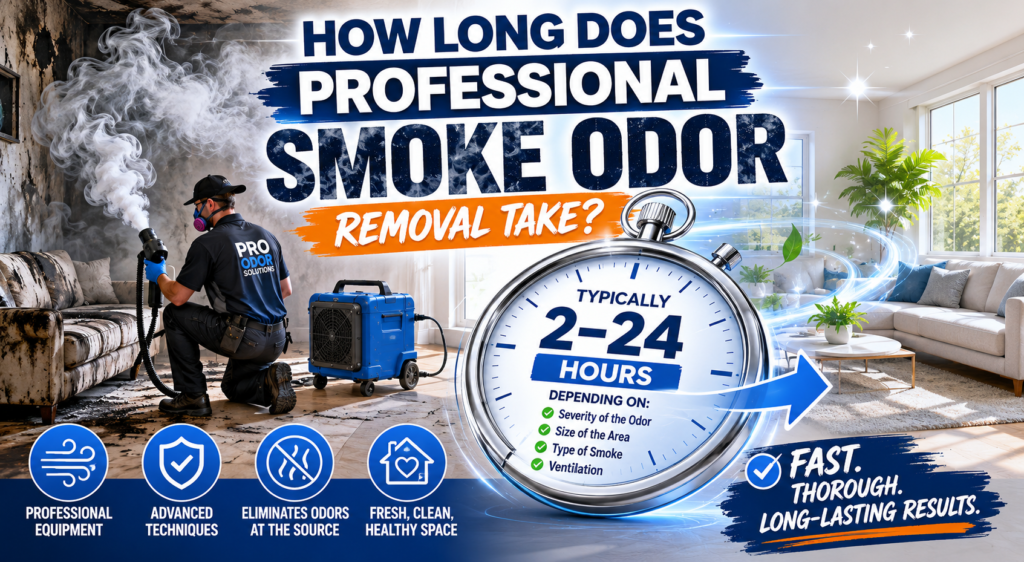
The time required to remove smoke odors depends on the size of the property, the source of the smoke, and how deeply the contamination has spread. A small area affected by light smoke exposure can often be treated relatively quickly, while severe fire-related damage may require a more extensive restoration process.
Several factors influence the timeline, including:
- The size of the home
- The type of smoke involved
- The amount of soot residue present
- Whether the HVAC system is contaminated
- The number of affected materials and belongings
- The deodorization methods being used
Light smoke odors may be addressed within a few days, while larger restoration projects can take significantly longer. Homes with extensive contamination often require multiple cleaning and deodorization stages to achieve the best results.
The goal is not simply to reduce odors temporarily but to eliminate the source of the smell as thoroughly as possible.
Can Smoke Smell Be Removed Permanently?
In many cases, professional smoke odor removal can permanently eliminate unwanted smells. Success depends on whether all smoke residue and odor-causing particles are properly removed from the home.
When smoke particles remain trapped inside building materials, furniture, insulation, or HVAC systems, odors may return over time. This is why professional restoration focuses on cleaning, filtration, and deodorization rather than covering odors with fragrances.
Permanent odor removal is most successful when:
- Soot residue is completely removed
- Smoke-damaged materials are properly cleaned
- Air filtration equipment is used
- HVAC contamination is addressed
- Appropriate deodorization methods are applied
In some situations, heavily contaminated materials may need to be replaced if cleaning cannot fully eliminate the odor.
DIY vs. Professional Smoke Odor Removal
Many homeowners initially attempt to remove smoke odors using household cleaners, air fresheners, baking soda, or vinegar solutions. While these methods may help reduce mild odors, they often do not address smoke particles hidden within materials and ventilation systems.
The difference between DIY cleaning and professional restoration becomes more noticeable when dealing with persistent smoke odors.
| DIY Smoke Removal | Professional Smoke Odor Removal |
|---|---|
| Focuses on visible surfaces | Targets visible and hidden contamination |
| Uses household products | Uses commercial-grade equipment |
| May temporarily reduce odors | Aims for long-term odor elimination |
| Limited access to affected areas | Reaches structural and HVAC components |
| Often requires repeated treatments | Designed to address the source directly |
DIY methods can be useful for minor smoke exposure, but severe odors often require specialized restoration techniques to achieve lasting results.
When Should You Call a Professional?
While some smoke odors can be reduced through routine cleaning, there are situations where professional assistance is the most effective solution.
Consider contacting a restoration professional if:
- Smoke odors remain after repeated cleaning
- A recent fire affected the property
- Smoke smells are coming from walls or ceilings
- The HVAC system is spreading odors throughout the home
- Soot residue is visible on surfaces
- Indoor air quality has noticeably declined
Professional intervention is especially important after fire-related incidents, where hidden contamination may continue affecting the property long after visible smoke has cleared.
In these situations, comprehensive Fire and Smoke Damage Mitigation can help address both visible damage and lingering odor issues before they become more difficult to remove.
If the fire resulted in damaged materials throughout the property, Debris Removal may also be necessary as part of the restoration process.
Common Mistakes That Allow Smoke Odors to Return
Even after cleaning, certain mistakes can cause smoke smells to linger or reappear.
Some of the most common issues include:
- Cleaning only visible surfaces
- Ignoring air ducts and HVAC components
- Skipping deodorization treatments
- Using products that mask odors instead of neutralizing them
- Failing to remove soot residue completely
- Overlooking smoke contamination in fabrics and upholstery
Because smoke particles can travel throughout a home, missing even a few contaminated areas may allow odors to persist.
A thorough restoration process addresses all affected surfaces and materials, reducing the likelihood of recurring odor problems.
conclusion
If you’re wondering how to get smoke smell out of a house professionally, the process involves much more than simply covering up unpleasant odors. Restoration professionals remove soot and smoke residue, deep-clean affected materials, treat HVAC systems, filter contaminated air, and apply advanced deodorization techniques designed to eliminate odor particles at their source.
While the exact approach varies depending on the severity of the damage, professional smoke odor removal offers the most reliable path to restoring indoor air quality and creating a cleaner, fresher living environment. Acting quickly after smoke exposure can also help prevent contamination from spreading further into building materials and household belongings.
FAQs
Can smoke smell be removed completely from a house?
Yes, professional smoke odor removal can eliminate smoke smells when all affected surfaces, materials, and air systems are properly treated.
What do professionals use to remove smoke odors?
Professionals use HEPA air scrubbers, activated carbon filters, thermal fogging, ozone treatments, and hydroxyl generators to neutralize smoke odors.
How long does it take to remove smoke smell from a house?
The timeline varies based on the severity of contamination, but most projects take anywhere from a few days to several weeks.
Does smoke odor stay in walls?
Yes, smoke particles can penetrate drywall, insulation, and other porous materials, causing odors to linger if not professionally cleaned.
Is ozone treatment safe for smoke odor removal?
Ozone treatment can be effective but must be performed in unoccupied spaces by trained professionals following safety guidelines.
Why does smoke smell come back after cleaning?
Odors often return when hidden smoke residue remains in walls, fabrics, HVAC systems, or other hard-to-reach areas.
Should I hire a professional after smoke damage?
Professional restoration is recommended when odors persist, soot is present, or smoke contamination affects multiple areas of the home.
References
- U.S. Environmental Protection Agency (EPA) – Indoor Air Quality
https://www.epa.gov/indoor-air-quality-iaq - Centers for Disease Control and Prevention (CDC) – Smoke and Indoor Air Quality
https://www.cdc.gov/air - Federal Emergency Management Agency (FEMA) – Fire Recovery Resources
https://www.fema.gov - National Fire Protection Association (NFPA) – Fire Safety and Recovery Information
https://www.nfpa.org - American Lung Association – Indoor Air Pollutants and Air Quality
https://www.lung.org