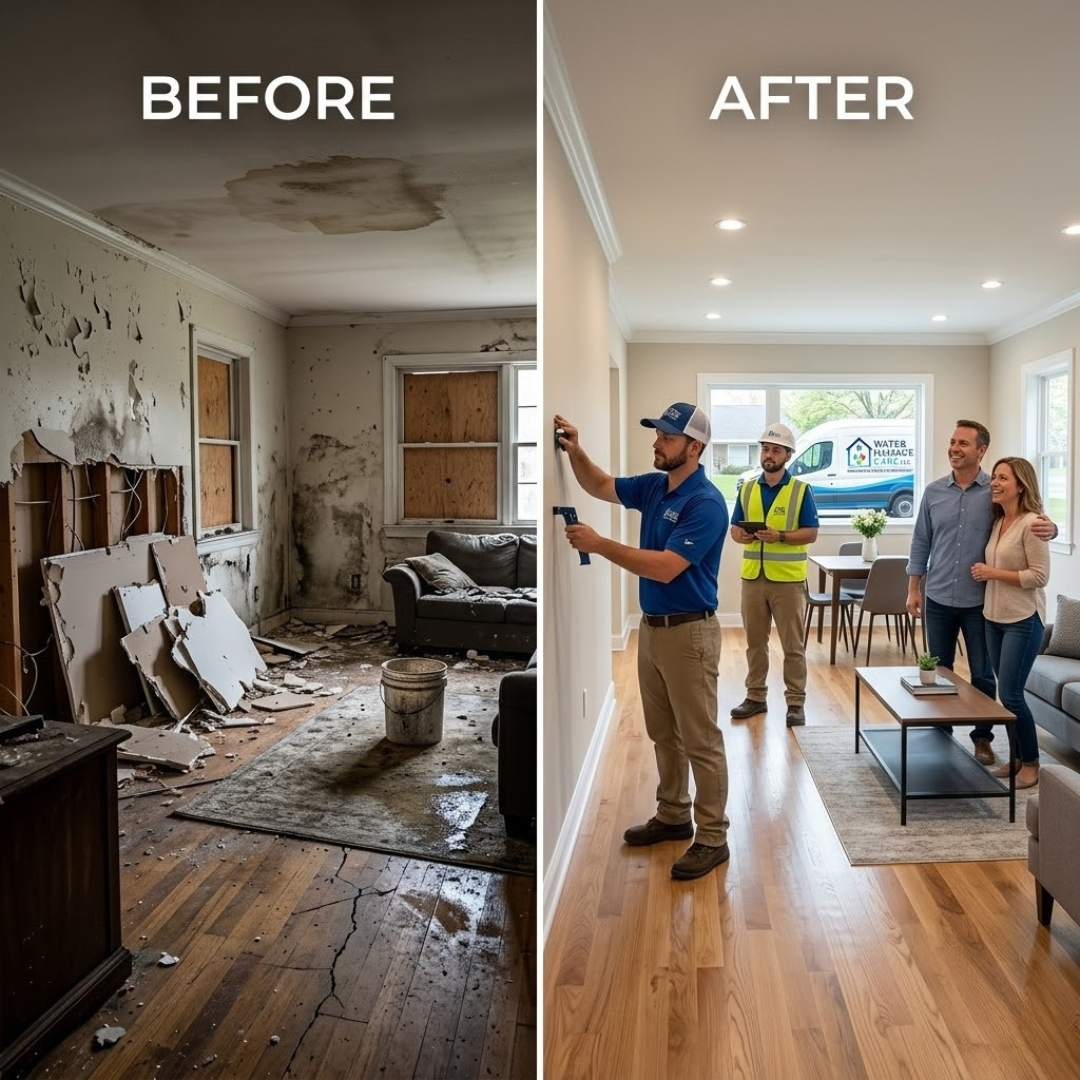
How much water causes water damage is not determined by a fixed quantity, but by how long moisture stays and how deeply it penetrates building materials. Even a small leak or a few tablespoons of water can start causing damage if absorbed into porous surfaces like drywall, wood, or insulation. Over time, exposure increases severity, leading from minor surface issues to structural deterioration and mold growth. The key risk factor is time, not just volume, which makes early detection and quick drying essential.
Even a small amount of water can cause damage if it is left for several hours. Materials like drywall, wood, and insulation absorb moisture quickly, leading to structural weakening and mold growth. Standing water causes faster and more severe damage, especially if not removed and dried immediately.
Understanding How Water Causes Damage in a Home
Water damage in a home does not always depend on large flooding. Even a small and continuous amount of water can begin damaging building materials if it is left untreated. The key factors are time, absorption rate, and the type of material exposed to moisture.
When looking at how much water causes water damage, it is important to understand that moisture spreads quickly through porous materials. Drywall, wood, and insulation absorb water fast, leading to weakening, swelling, and structural deterioration if not addressed early. In many cases, hidden leaks require proper leak detection to identify the source before damage spreads further.
- Water spreads through porous building materials
- Even small leaks can lead to long-term damage
- Time exposure increases severity significantly
- Hidden moisture often causes the most damage
How Much Water Is Enough to Cause Water Damage?
There is no fixed minimum amount of water required to cause damage. Even a few tablespoons of water, if left unattended, can begin affecting surfaces over time. What matters most is how long the water remains and whether it is absorbed into materials.
When evaluating how much water causes water damage, professionals consider both visible and hidden moisture. A small leak behind a wall can often cause more damage than a visible spill because it spreads continuously without being noticed.
- Small leaks can still cause structural issues
- Water trapped in materials increases damage risk
- Continuous moisture is more dangerous than one-time spills
- Absorption rate depends on surface type
Small Amount of Water vs Severe Water Damage
Water damage severity is categorized based on volume and exposure. Light moisture may only affect surface layers, while larger volumes can penetrate deep into structural components. Understanding these levels helps determine urgency and response.
Even minimal water exposure can escalate quickly if not handled properly. The difference between minor and severe damage often depends on how fast the water is removed and how effectively the area is dried using proper water extraction and removal methods.
- Light moisture affects only surface materials
- Moderate water can damage flooring and drywall
- Severe exposure impacts structure and foundation
- Time plays a critical role in damage progression
Light Moisture (Humidity & Small Leaks)
Light moisture includes condensation, small leaks, or damp surfaces. While it may seem harmless, repeated exposure can weaken materials over time and create conditions for mold growth.
Even minor moisture buildup should not be ignored, especially in enclosed areas where air circulation is limited and drying is slow.
- Slow moisture absorption into surfaces
- Gradual weakening of materials
- Risk of mold if left untreated
Moderate Water Exposure (Puddles & Spills)
Moderate water exposure involves visible puddles or ongoing leaks that affect flooring and lower wall sections. This level of water can quickly penetrate materials if not cleaned promptly.
At this stage, professional drying may be needed to avoid long-term structural damage, often requiring controlled drying techniques like structural drying and dehumidification.
- Flooring and drywall begin absorbing water
- Increased risk of swelling and warping
- Moisture spreads beneath surfaces
Severe Water Exposure (Flooding or Standing Water)
Severe water exposure occurs when standing water remains for extended periods or flooding affects multiple areas. This level of damage can compromise structural integrity and lead to costly repairs.
Immediate removal is critical because prolonged exposure significantly increases the risk of mold growth and material breakdown.
- Structural saturation of materials
- Rapid deterioration of building components
- High risk of mold within 24–48 hours
How Fast Does Water Start Causing Damage?
Water begins causing damage almost immediately after exposure. Within minutes, materials start absorbing moisture, and within hours, swelling and weakening can begin.
After 24–48 hours, mold growth becomes a serious risk, making fast action essential. In many cases, effective drying using structural drying and dehumidification helps reduce long-term damage and prevents hidden moisture from spreading.
- Damage begins within minutes of exposure
- Structural weakening occurs within hours
- Mold risk increases after 24–48 hours
- Delayed action leads to higher repair costs
How Different Materials React to Water Exposure
Different materials react differently to water exposure depending on how porous or dense they are. Some absorb moisture almost instantly, while others take longer to show damage.
Porous materials are especially vulnerable because they retain moisture, which can remain trapped and hidden unless proper moisture monitoring is used to detect it early.
- Drywall absorbs water quickly and weakens fast
- Wood flooring swells and warps with moisture
- Carpet traps water and promotes mold growth
- Concrete resists water but still absorbs moisture
Drywall Damage
Drywall is one of the most vulnerable materials because it absorbs water rapidly and loses strength quickly. Once saturated, it often cannot be repaired and must be replaced.
- Swelling and softening of material
- Loss of structural integrity
- Visible staining and crumbling
Hardwood Flooring Damage
Hardwood flooring reacts quickly to water by expanding and warping. Even small spills can cause permanent deformation if not dried properly.
- Boards expand and lift
- Gaps form between planks
- Surface cracking over time
Carpet and Insulation Damage
Carpet and insulation trap moisture deep within fibers, making them difficult to dry completely. This creates a strong risk of mold growth if not handled quickly.
- Moisture retention inside fibers
- High risk of mold development
- Loss of insulation efficiency
Concrete and Foundation Impact
Concrete is more resistant but still porous. Over time, moisture can seep in and cause cracks or weaken the structure.
- Slow water absorption
- Hairline cracks forming over time
- Long-term foundation stress
Hidden Water Damage Risks Homeowners Miss
One of the most dangerous aspects of water damage is hidden moisture. Water can travel behind walls, under flooring, and inside insulation without visible signs.
These hidden issues often go unnoticed until damage becomes severe, which is why early detection and proper moisture monitoring are essential to prevent long-term structural problems.
- Moisture trapped behind walls
- Water under flooring systems
- Slow leaks inside plumbing lines
- Reduced indoor air quality
How Different Causes Lead to Different Types of Damage
The type of water damage a home experiences depends heavily on the source of water and how long it remains untreated. Clean water from a small leak may cause limited surface damage, while contaminated or standing water can quickly lead to structural issues and health risks. This is why understanding how much water causes water damage also requires looking at the source and behavior of water inside a building.
Different causes affect different materials in different ways. For example, a slow leak may weaken drywall over time, while sudden flooding can instantly saturate flooring and insulation. In more severe cases, quick response using water extraction and removal becomes essential to limit long-term damage.
- Clean water causes slower, limited damage
- Grey or dirty water increases contamination risk
- Standing water leads to rapid structural weakening
- Hidden leaks often cause long-term deterioration
How to Prevent Water Damage From Small Amounts
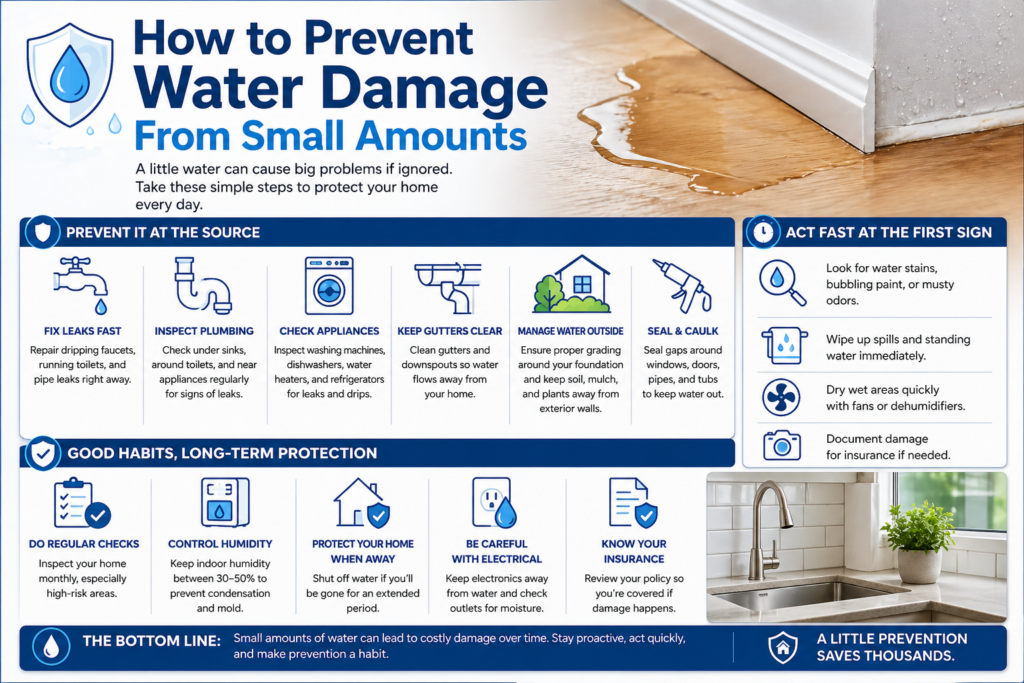
Preventing water damage starts with controlling even the smallest sources of moisture. Many serious issues begin as minor leaks or unnoticed damp spots that gradually spread. Regular inspection and early response are key to avoiding expensive repairs later.
Understanding how much water causes water damage also helps in prevention, because it highlights that even small amounts of water should never be ignored. Simple maintenance steps and early repairs can significantly reduce long-term risks.
- Inspect plumbing systems regularly
- Fix small leaks immediately
- Improve ventilation in damp areas
- Monitor humidity levels indoors
Water Damage Restoration Process Explained
Water damage restoration involves several important steps designed to remove water, dry materials, and restore safe living conditions. The process must begin quickly because delayed action increases the risk of mold growth and structural deterioration.
In most cases, professionals start by removing standing water, followed by controlled drying using structural drying and dehumidification techniques. This ensures that hidden moisture is also eliminated, not just visible water.
- Water removal from affected areas
- Drying of walls, floors, and structures
- Dehumidification to control moisture levels
- Cleaning and sanitizing contaminated surfaces
When to Call a Professional
Not all water damage can be handled with basic cleanup methods. When water spreads beyond a small area or remains for too long, professional intervention becomes necessary to prevent deeper structural issues.
If there is hidden moisture or repeated leakage, professionals often use advanced tools for leak detection and full drying assessment. In severe cases, services like basement flood cleanup may also be required to fully restore the affected area.
- Large or widespread water exposure
- Persistent or hidden leaks
- Signs of structural weakening
- Risk of mold or contamination
Cost Impact Based on Water Amount
The cost of water damage repair depends heavily on how much water is involved and how long it stays untreated. Small leaks may only require minor repairs, while large-scale flooding can lead to full restoration work.
When evaluating how much water causes water damage, it becomes clear that even small amounts can become expensive if ignored. The longer water remains, the more materials it affects, increasing both labor and restoration costs.
- Small leaks: low repair cost if caught early
- Moderate water: flooring and drywall replacement needed
- Severe flooding: structural repair and full restoration
- Hidden damage increases overall cost significantly
Long-Term Water Damage Prevention Strategies
Long-term prevention focuses on reducing the chances of water entering or staying inside a home. This includes regular maintenance, monitoring systems, and structural improvements that protect against both visible and hidden moisture.
Consistent use of tools like moisture monitoring helps detect early signs of water buildup before serious damage occurs. Prevention is always more cost-effective than repair, especially in areas prone to leaks or flooding.
- Routine inspection of plumbing and roofing
- Proper drainage system maintenance
- Early detection using moisture tracking tools
- Immediate repair of weak or damaged areas
Water Damage Severity Comparison Table
| Water Amount | Exposure Time | Damage Level | Affected Materials | Risk Level |
|---|---|---|---|---|
| Small leak | Hours–days | Low | Surface areas | Low |
| Moderate water | 1–2 days | Medium | Flooring, drywall | Medium |
| Standing water | Minutes–hours | High | Structure, insulation | High |
| Flooding | Extended | Severe | Entire property | Critical |
FAQs
1. How much water causes water damage in a home?
Even a small amount of water can cause damage if it is left for several hours or absorbed into materials.
2. Can a small leak really cause serious water damage?
Yes, continuous small leaks can weaken walls, flooring, and lead to mold growth over time.
3. How fast does water start damaging a house?
Water can start damaging materials within minutes, with serious damage developing within 24–48 hours.
4. Does standing water always cause damage?
Yes, standing water quickly saturates materials and increases the risk of structural and mold damage.
5. What materials are most affected by water damage?
Drywall, wood flooring, carpet, and insulation are highly vulnerable to moisture absorption.
6. Can water damage be reversed?
Minor damage can sometimes be restored if addressed quickly, but severe damage often requires replacement.
Conclusion
Understanding how much water causes water damage is essential for protecting a home from costly repairs and structural issues. Even small amounts of water can lead to serious damage if they are left untreated, especially when they spread into porous materials like drywall, wood, or insulation.
The key to prevention is early detection and fast response. Whether it is a minor leak or major flooding, acting quickly with proper drying and repair methods can significantly reduce long-term damage and restore safety to the property.
References
- Federal Emergency Management Agency (FEMA) – Flood and Water Damage Safety
https://www.fema.gov - Environmental Protection Agency (EPA) – Moisture and Mold Prevention
https://www.epa.gov/mold - Centers for Disease Control and Prevention (CDC) – Flood Cleanup Guidelines
https://www.cdc.gov/disasters/floods - International Association of Certified Home Inspectors (InterNACHI) – Water Damage Basics
https://www.nachi.org - National Flood Insurance Program (NFIP) – Water Damage and Insurance Info
https://www.floodsmart.gov