Category: Water Damage Mitigation

  • How to Detect Water Damage in Walls: Warning Signs, Inspection Methods, and What to Do Next

    How to Detect Water Damage in Walls: Warning Signs, Inspection Methods, and What to Do Next

    How to detect water damage in walls starts with recognizing both visible and hidden warning signs of moisture intrusion. Common indicators include water stains, peeling paint, warped drywall, mold growth, musty odors, increased humidity, and unexplained water usage. Homeowners can inspect walls visually, perform simple touch tests, and use tools such as moisture meters or infrared cameras to identify hidden moisture. Detecting water damage early helps prevent mold growth, structural deterioration, and costly repairs while protecting the long-term condition of the property.

    Water damage in walls can often be detected by looking for discoloration, peeling paint, soft drywall, mold growth, musty odors, and warped surfaces. Homeowners can also use moisture meters or infrared cameras to identify hidden moisture behind walls before it leads to more extensive structural damage.

    Why Water Damage Inside Walls Is Often Difficult to Notice

    Unlike water pooling on a floor, moisture inside walls is usually concealed behind drywall, insulation, paint, and wall coverings. As a result, water can spread through building materials without being immediately visible.

    In many cases, the leak source may be several feet away from where the damage eventually appears. Water often follows gravity, framing members, or hidden pathways before becoming noticeable on a wall surface.

    Routine inspections can help homeowners catch early warning signs before moisture leads to mold, wood deterioration, or expensive repairs.

    Common Sources of Wall Moisture

    Several issues can introduce unwanted moisture into walls:

    • Leaking supply or drain pipes
    • Roof leaks that travel into wall cavities
    • Poorly sealed windows and doors
    • HVAC condensation problems
    • Appliance leaks from washing machines or water heaters
    • Basement moisture migrating upward through walls

    When moisture originates from a concealed plumbing issue, a professional hidden leak inspection may help identify the source before further damage occurs.

    Visible Signs of Water Damage in Walls

    Many of the earliest indicators of water damage can be seen during a simple visual inspection. Changes in color, texture, or shape often signal that moisture is affecting the wall material beneath the surface.

    Discoloration and Water Stains

    Water stains are among the most recognizable signs of moisture damage. They often appear as yellow, brown, or dark patches that gradually expand over time.

    These stains may develop near ceilings, windows, plumbing fixtures, or areas where water is entering the structure. Even a small stain can indicate a larger hidden moisture problem behind the wall.

    Look for:

    • Yellow or brown rings
    • Dark streaks
    • Irregular patchy discoloration
    • Expanding stain patterns

    Bubbling, Peeling, or Cracking Paint

    When moisture becomes trapped behind painted surfaces, it can weaken the bond between the paint and the wall.

    As water accumulates, paint may begin to bubble, blister, peel, or crack. Wallpaper may also loosen or separate from the wall surface.

    These cosmetic changes often indicate that moisture has been present long enough to affect the wall finish.

    Common warning signs include:

    • Paint bubbles
    • Flaking paint
    • Cracked paint surfaces
    • Loose wallpaper seams

    Warped Drywall and Soft Wall Surfaces

    Drywall is highly absorbent and can become distorted when exposed to excessive moisture.

    As water penetrates the material, walls may begin to bulge, swell, sag, or feel soft when lightly pressed. In severe situations, sections of drywall may crumble or lose structural strength.

    Pay attention to:

    • Uneven wall surfaces
    • Bulging sections
    • Soft spots
    • Sagging drywall

    These changes often suggest moisture has been present for an extended period.

    Mold and Mildew Growth

    Mold and mildew thrive in damp, poorly ventilated environments. Since wall cavities can remain moist for long periods, they often provide ideal conditions for fungal growth.

    Visible mold may appear as black, green, gray, or white spots on painted surfaces, drywall, baseboards, or around trim.

    Beyond property damage, mold can affect indoor air quality and may contribute to respiratory irritation for some occupants.

    Potential indicators include:

    • Dark spots on walls
    • Fuzzy surface growth
    • Discoloration around trim
    • Persistent moisture-related odors

    Hidden Signs That May Indicate Moisture Behind Walls

    Not all water damage produces obvious visual symptoms. In many cases, homeowners notice subtle environmental changes before any visible damage appears.

    Recognizing these hidden warning signs can help identify problems earlier.

    Musty Odors

    A persistent musty smell is often one of the first signs of hidden moisture.

    When water becomes trapped inside walls, mold and mildew can begin developing even before visible growth appears. These microorganisms release odors that create a damp, earthy smell throughout the affected area.

    If a room consistently smells musty despite regular cleaning, hidden wall moisture may be present.

    Increased Indoor Humidity

    Unexpected humidity levels can sometimes indicate moisture accumulation inside walls.

    A leaking pipe or slow water intrusion may continuously release moisture into the surrounding air. Over time, this can make certain rooms feel damp or uncomfortable.

    Signs may include:

    • Condensation on windows
    • Damp indoor air
    • Increased humidity readings
    • Persistent moisture in specific rooms

    Monitoring indoor moisture levels can help determine whether hidden water issues may be contributing to elevated humidity.

    Unexplained Utility Bill Increases

    A hidden plumbing leak behind a wall can waste a surprising amount of water over time.

    If water usage suddenly increases without a clear explanation, it may be worth investigating for concealed leaks. Small leaks often remain unnoticed until they create visible wall damage or significantly impact water consumption.

    Reviewing monthly utility bills can sometimes reveal problems before physical damage becomes extensive.

    Temperature Differences on Wall Surfaces

    Walls affected by moisture may feel cooler than surrounding areas.

    Water changes how building materials retain and transfer heat, creating temperature differences that can sometimes be detected by touch. Damp sections may feel noticeably colder, especially during seasonal temperature changes.

    Professionals often use infrared imaging technology to identify these hidden temperature variations and locate moisture pockets concealed behind drywall.

    Visible vs Hidden Signs of Water Damage

    Visible SignsHidden Signs
    Water stainsMusty odors
    Peeling or bubbling paintIncreased humidity
    Mold growth on surfacesHidden plumbing leaks
    Warped drywallCool wall sections
    Surface discolorationMoisture trapped behind insulation

    Understanding both visible and hidden warning signs can help homeowners identify water damage before it spreads. The earlier moisture problems are discovered, the easier it is to prevent mold growth, structural deterioration, and more extensive repairs.

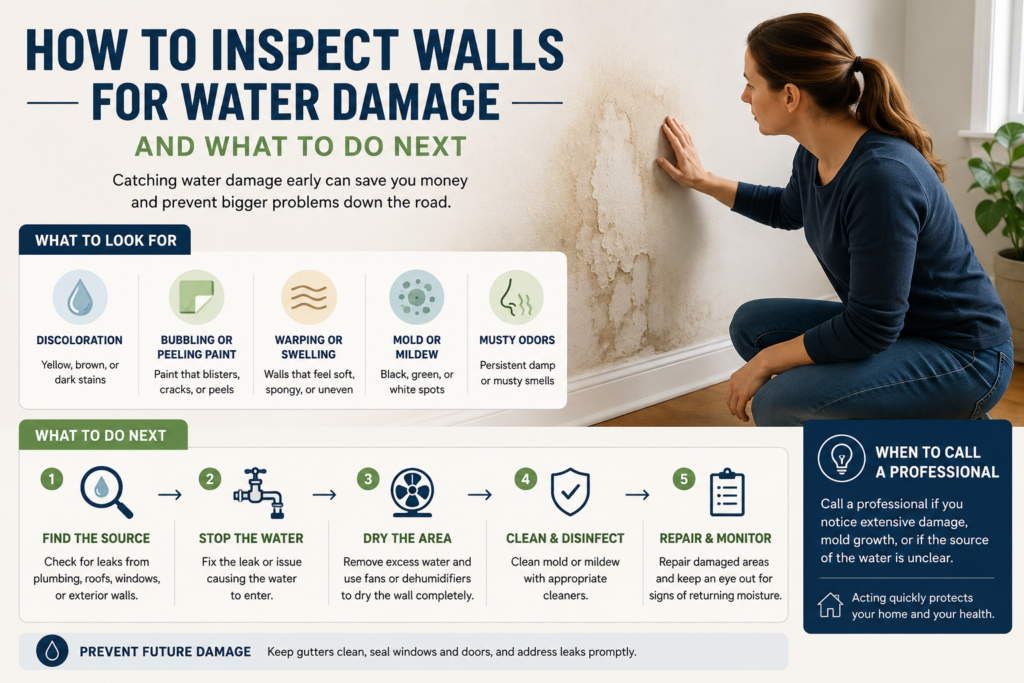
    How to Inspect Walls for Water Damage and What to Do Next
    what does a water mitigation company do

    Once you recognize potential warning signs, the next step is determining whether moisture is actually present inside the wall. While some cases require professional equipment, homeowners can perform several basic inspections to identify possible water damage before it worsens.

    Simple Ways to Check Walls for Water Damage

    A thorough inspection often begins with a combination of visual observations and simple hands-on checks. These methods can help reveal whether a wall may be affected by hidden moisture.

    Perform a Visual Inspection

    Start by examining walls in areas most vulnerable to water exposure, such as bathrooms, kitchens, laundry rooms, basements, and rooms beneath the roof.

    Look carefully at corners, ceilings, baseboards, and areas around windows and plumbing fixtures.

    Watch for:

    • Water stains
    • Paint discoloration
    • Mold growth
    • Surface bubbling
    • Warped drywall
    • Damaged trim

    Even minor cosmetic changes can indicate a larger hidden moisture issue.

    Use the Touch Test

    In addition to visual inspection, gently touch suspicious areas.

    Walls affected by moisture often feel different from dry surfaces. Softness, dampness, or slight movement beneath pressure may suggest water intrusion behind the drywall.

    Pay attention to:

    • Soft spots
    • Damp surfaces
    • Spongy drywall
    • Uneven textures

    If a wall feels unusually soft, further moisture testing may be necessary.

    Listen for Hidden Plumbing Leaks

    Some leaks can be detected through sound before visible damage develops.

    In a quiet room, listen for:

    • Dripping sounds
    • Running water
    • Hissing noises
    • Water movement inside walls

    These sounds may indicate a concealed plumbing issue that requires further investigation.

    Tools That Help Detect Hidden Moisture

    While visual inspections are useful, specialized tools can provide a more accurate assessment of moisture levels inside walls.

    Moisture Meters

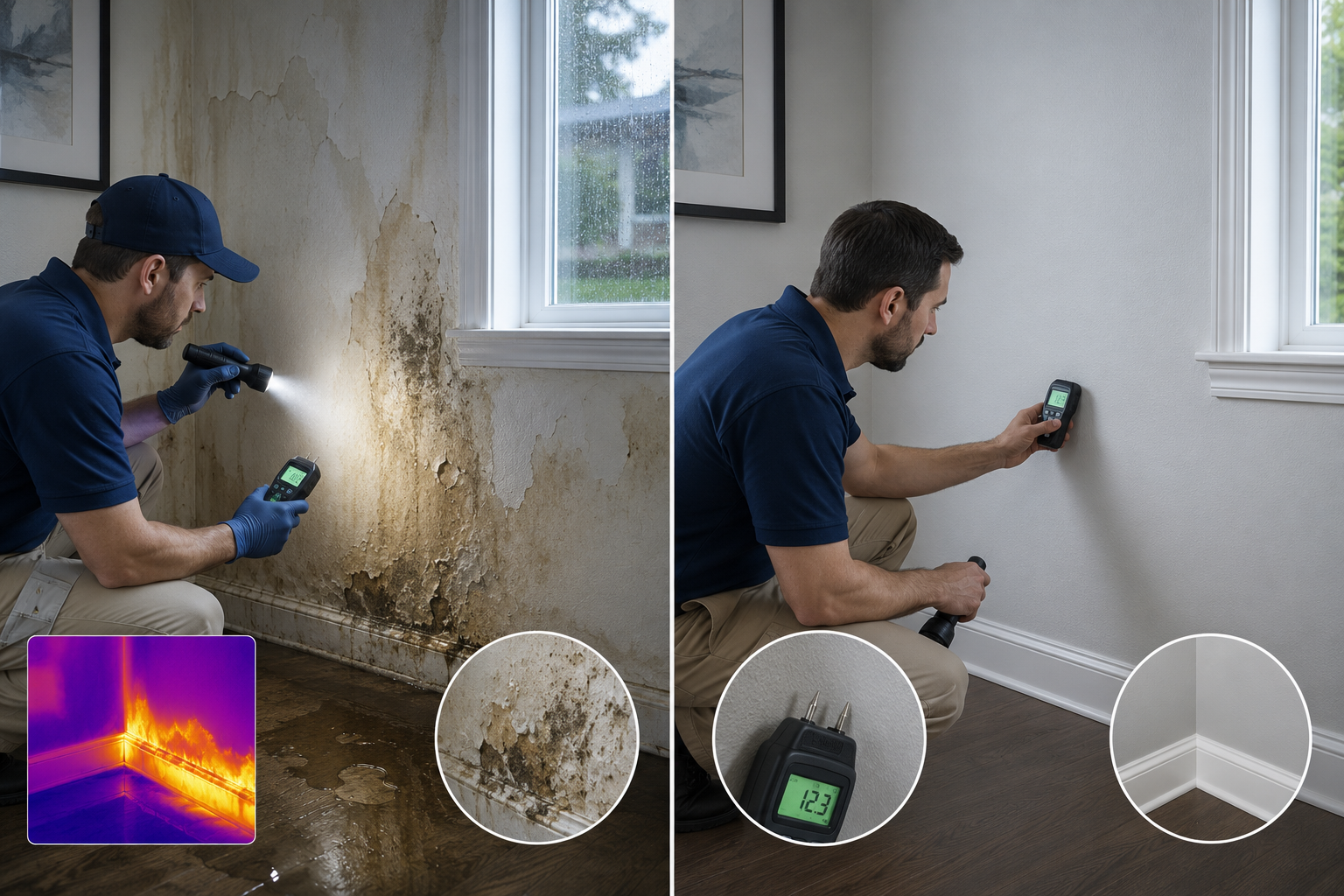
    A moisture meter is one of the most effective tools for detecting hidden water damage.

    The device measures moisture content within building materials, helping determine whether drywall, wood, or other surfaces contain excess water.

    Benefits include:

    • Non-invasive testing
    • Fast moisture readings
    • Early leak detection
    • Verification of drying progress

    Tracking wall moisture levels over time can help confirm whether a problem is improving or becoming worse.

    Infrared Cameras

    Infrared cameras detect temperature differences across wall surfaces.

    Since moisture affects heat transfer, damp areas often appear cooler than surrounding materials. Thermal imaging can reveal hidden moisture pockets that may not yet show visible damage.

    Infrared inspections are especially useful for:

    • Locating concealed leaks
    • Identifying moisture migration
    • Assessing larger wall areas quickly

    Hygrometers

    A hygrometer measures indoor humidity levels.

    Although it cannot directly locate moisture inside a wall, it can help identify rooms where excessive humidity may indicate a hidden water problem.

    Consistently high humidity readings may suggest:

    • Ongoing leaks
    • Condensation issues
    • Poor ventilation
    • Moisture trapped within building materials

    How to Tell Whether the Damage Is Active or Old

    One of the most common questions homeowners ask is whether water damage is still occurring or if it resulted from a previous issue that has already been repaired.

    Understanding the difference can help determine the appropriate next steps.

    Signs of an Active Leak

    Active water damage typically continues to worsen over time.

    Common indicators include:

    • Expanding water stains
    • Damp surfaces
    • Ongoing mold growth
    • Increasing humidity
    • Fresh paint bubbling
    • New discoloration

    If these symptoms continue to develop, the source of water should be identified as quickly as possible.

    A professional hidden leak inspection may help pinpoint ongoing water intrusion before more extensive damage occurs.

    Signs of Previous Water Damage

    Older water damage often remains visible even after the moisture source has been eliminated.

    Signs of past damage may include:

    • Dry, stable stains
    • Repaired drywall sections
    • Previously painted areas
    • Consistent moisture readings
    • No signs of active mold growth

    While cosmetic repairs may still be needed, stable conditions usually indicate that the original water source has already been addressed.

    What to Do After Discovering Water Damage in a Wall

    Finding water damage can be stressful, but taking prompt action can significantly reduce repair costs and prevent additional problems.

    Stop the Source of Water

    Before addressing the damage itself, identify and stop the source of moisture.

    Depending on the situation, this may involve:

    • Shutting off water supplies
    • Repairing plumbing leaks
    • Fixing roof damage
    • Sealing windows or exterior openings
    • Correcting drainage issues

    Resolving the source is essential because repairs will not last if water continues entering the wall.

    Dry the Affected Area

    Once the leak has been stopped, focus on drying the affected area as quickly as possible.

    Moisture left inside walls can contribute to mold growth, wood deterioration, and drywall damage.

    Drying methods may include:

    • Increased ventilation
    • Fans
    • Dehumidifiers
    • Air movers

    In more severe cases, professional structural drying and dehumidification may be necessary to remove moisture trapped deep within building materials.

    Assess Repair Needs

    After drying is complete, evaluate the extent of the damage.

    Minor issues may only require cosmetic repairs, while more significant damage could involve replacing drywall, insulation, trim, or structural components.

    Areas to assess include:

    • Drywall condition
    • Mold contamination
    • Wood framing integrity
    • Insulation damage
    • Paint and finish materials

    Early intervention often limits the scope of repairs.

    Prevent Future Moisture Problems

    Preventing future water damage is just as important as repairing existing issues.

    Homeowners can reduce risk by:

    • Inspecting plumbing regularly
    • Monitoring indoor humidity
    • Checking roofs and gutters
    • Maintaining window seals
    • Addressing leaks immediately

    Ongoing monitoring of wall moisture can help identify developing issues before visible damage appears.

    In situations involving flooding or significant water intrusion, removing standing water quickly is critical to minimizing long-term damage. If moisture originates from basement flooding, prompt cleanup and drying can help prevent water from migrating into surrounding walls.

    conclusion

    Learning how to detect water damage in walls can help homeowners identify problems before they lead to extensive repairs, mold growth, or structural deterioration. Visible signs such as stains, peeling paint, and warped drywall often provide important clues, while musty odors, humidity changes, and temperature differences may reveal hidden moisture.

    Regular inspections, moisture-testing tools, and prompt action when warning signs appear can significantly reduce the impact of water damage. The sooner moisture issues are identified and addressed, the easier it becomes to protect both the home and its long-term value.

    FAQs

    1. What are the first signs of water damage in walls?
    Common early signs include discoloration, peeling paint, musty odors, and soft spots on the wall surface.

    2. Can water damage be hidden behind drywall?
    Yes. Moisture can remain trapped behind drywall and insulation long before visible damage appears.

    3. How do professionals detect water damage in walls?
    Professionals often use moisture meters, infrared cameras, and humidity testing equipment to locate hidden moisture.

    4. Is a musty smell a sign of water damage?
    A persistent musty odor can indicate excess moisture, mold growth, or a hidden leak inside the wall.

    5. Can water-damaged walls dry out on their own?
    Minor moisture may dry naturally, but trapped water often requires proper drying to prevent mold and structural damage.

    6. When should I call a professional for wall water damage?
    You should seek professional help if moisture persists, mold develops, or the source of the water cannot be identified.

    7. Can a small leak cause major wall damage?
    Yes. Even a slow leak can gradually weaken drywall, damage framing, and create conditions for mold growth.

    References

    1. U.S. Environmental Protection Agency (EPA) – A Brief Guide to Mold, Moisture and Your Home
      EPA Mold, Moisture and Your Home Guide
    2. U.S. Environmental Protection Agency (EPA) – Ten Things You Should Know About Mold
      EPA Mold Facts and Prevention Guide
    3. U.S. Environmental Protection Agency (EPA) – Indoor Air Quality Reference Guide
      EPA Indoor Air Quality and Moisture Information
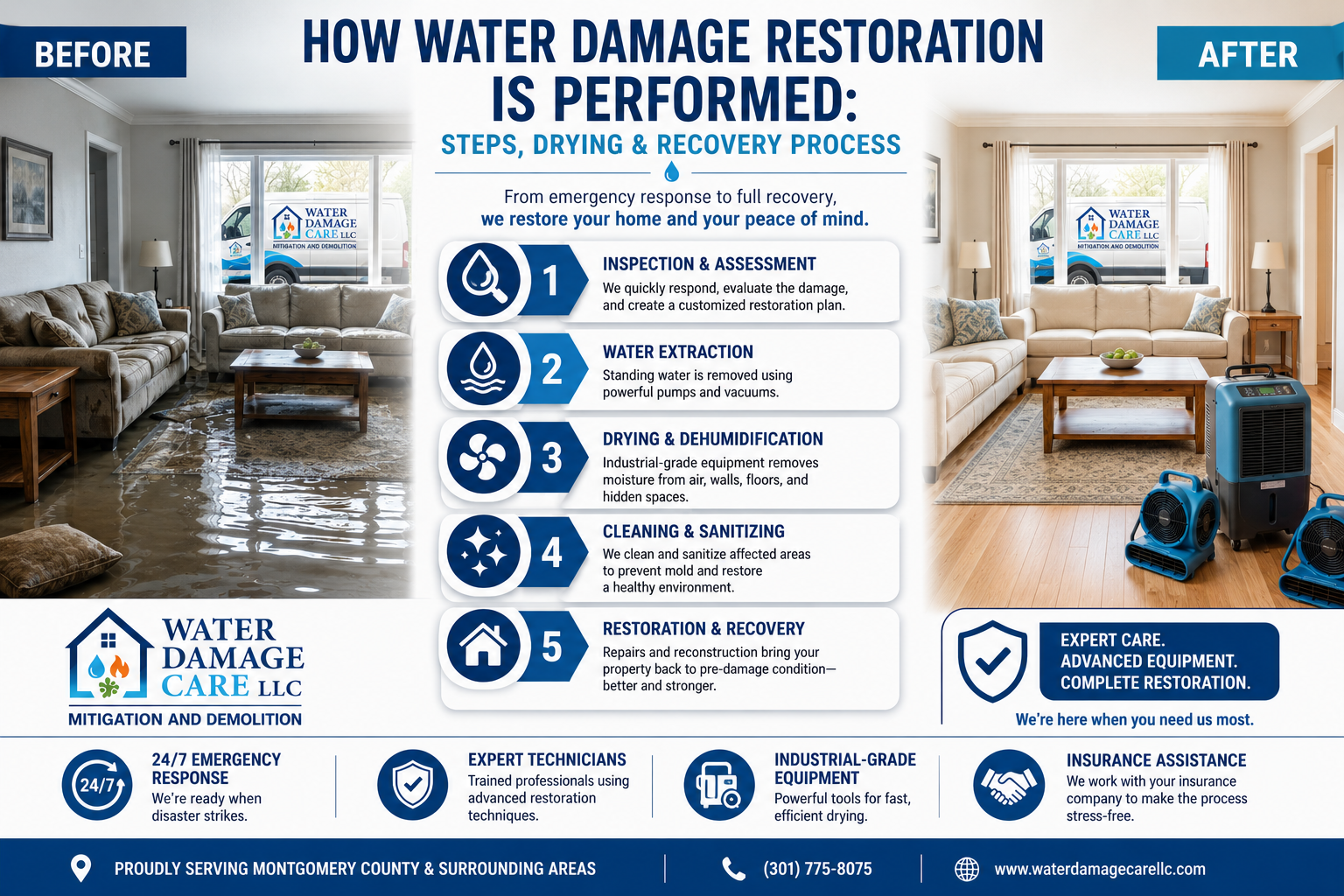
  • How Water Damage Restoration Is Performed: Steps, Drying & Recovery Process

    How Water Damage Restoration Is Performed: Steps, Drying & Recovery Process

    How water damage restoration is performed involves a step-by-step process that includes inspection, water extraction, moisture detection, structural drying, cleaning, sanitizing, and repairs. Professional restoration helps remove visible and hidden moisture, prevent mold growth, protect structural materials, and restore a property to its pre-damage condition as quickly and safely as possible.

    Water damage restoration is performed through a series of steps that include inspection, water extraction, moisture detection, drying, dehumidification, cleaning, and repairs. The goal is to remove water, prevent further damage, eliminate hidden moisture, and restore the property to its pre-damage condition.

    What Is Water Damage Restoration?

    Water damage restoration is the process of returning a property to its pre-damage condition after water intrusion. It involves more than simply removing standing water, as hidden moisture can remain behind walls, under floors, and inside structural materials.

    Professional restoration combines water removal, drying, cleaning, and repair procedures to prevent long-term damage. The exact process depends on the source of the water and the extent of the affected areas.

    Common causes of water damage include:

    • Burst pipes
    • Roof leaks
    • Appliance failures
    • Storm flooding
    • Plumbing issues

    How Water Damage Restoration Is Performed Step by Step

    Water damage restoration follows a structured process designed to remove water, eliminate moisture, and restore affected materials. Each step plays an important role in preventing additional damage and helping the property recover safely.

    While every project is different, most restoration jobs follow the same general sequence. The process begins with an inspection and continues through drying, cleaning, and final repairs.

    The main restoration steps include:

    • Inspection and assessment
    • Water extraction
    • Moisture detection
    • Structural drying
    • Cleaning and sanitizing
    • Restoration and repairs

    Initial Inspection and Damage Assessment

    The first step is identifying the source of the water and evaluating the affected areas. Restoration professionals inspect the property, determine the extent of damage, and create a plan for the recovery process.

    • Locate affected materials
    • Identify water category
    • Check for hidden moisture
    • Develop a restoration strategy

    Water Extraction

    After the assessment, standing water is removed using specialized extraction equipment. Fast water removal helps reduce damage and shortens the overall restoration timeline.

    In severe situations, professional water extraction and removal services may be necessary to eliminate standing water and prepare the property for the drying phase.

    • Remove standing water
    • Reduce material saturation
    • Protect structural components
    • Prepare for drying

    Moisture Detection

    Even after visible water is removed, moisture can remain trapped inside building materials. Technicians use specialized tools to locate hidden moisture before the drying process begins.

    • Moisture meters
    • Thermal imaging
    • Moisture mapping
    • Drying verification

    Structural Drying and Dehumidification

    The drying stage removes remaining moisture from walls, floors, ceilings, and other structural materials. Air movers and dehumidifiers work together to create controlled drying conditions.

    Professional structural drying and dehumidification techniques help prevent secondary damage and support a more complete restoration process.

    • Increase airflow
    • Remove excess humidity
    • Dry structural materials
    • Prevent secondary damage

    Cleaning and Sanitizing

    Once the affected materials are dry, the next step is cleaning and sanitizing the property. This helps remove dirt, bacteria, contaminants, and odors that may have been introduced by the water intrusion.

    • Clean affected surfaces
    • Apply antimicrobial treatments
    • Remove lingering odors
    • Improve indoor air quality

    Restoration and Repairs

    The final restoration stage focuses on repairing or replacing damaged materials. Depending on the severity of the damage, this may involve minor repairs or larger reconstruction work.

    • Replace damaged drywall
    • Repair flooring materials
    • Restore affected areas
    • Return the property to its original condition

    How Long Does Water Damage Restoration Take?

    The timeline for water damage restoration varies based on the amount of water, the size of the affected area, and the materials involved. Small water incidents may take only a few days, while larger losses can require several weeks.

    Hidden moisture can also extend the restoration process because materials must reach acceptable moisture levels before repairs begin. Professional monitoring helps ensure the property is fully dry before moving forward.

    Factors that affect restoration time include:

    • Extent of water damage
    • Type of water involved
    • Building materials affected
    • Amount of hidden moisture
    • Weather and humidity conditions

    Why Professional Water Damage Restoration Matters

    Professional restoration helps ensure that all visible and hidden moisture is properly addressed. Without thorough drying and cleaning, water damage can continue affecting a property long after the initial incident.

    Experienced technicians use specialized equipment and proven drying methods to reduce risks and improve restoration results. Their expertise helps protect both the property and the people inside it.

    Benefits of professional restoration include:

    • Faster recovery
    • Reduced risk of mold growth
    • Complete moisture removal
    • Protection of structural materials
    • Long-term cost savings

    Conclusion

    Water damage restoration is a multi-step process that includes inspection, water removal, moisture detection, drying, cleaning, and repairs. Each stage plays an important role in restoring a property and preventing additional damage.

    Acting quickly after water damage occurs can significantly improve restoration outcomes. By following a professional restoration process, property owners can help protect their investment and return their home or business to a safe, dry condition.

    FAQs

    How is water damage restoration performed?

    Water damage restoration involves inspection, water removal, drying, cleaning, and repairs to restore a property after water intrusion.

    How long does water damage restoration take?

    Most projects take a few days to several weeks, depending on the extent of the damage and drying requirements.

    What is the first step in water damage restoration?

    The process begins with a professional inspection to assess the damage and create a restoration plan.

    Can hidden moisture remain after water removal?

    Yes. Moisture can remain behind walls, under flooring, and inside structural materials if not properly detected and dried.

    Why is professional drying important?

    Professional drying helps prevent mold growth, structural damage, and other long-term issues caused by trapped moisture.

    References

  • What Should I Not Do After Water Damage? Common Mistakes Homeowners Must Avoid

    What Should I Not Do After Water Damage? Common Mistakes Homeowners Must Avoid

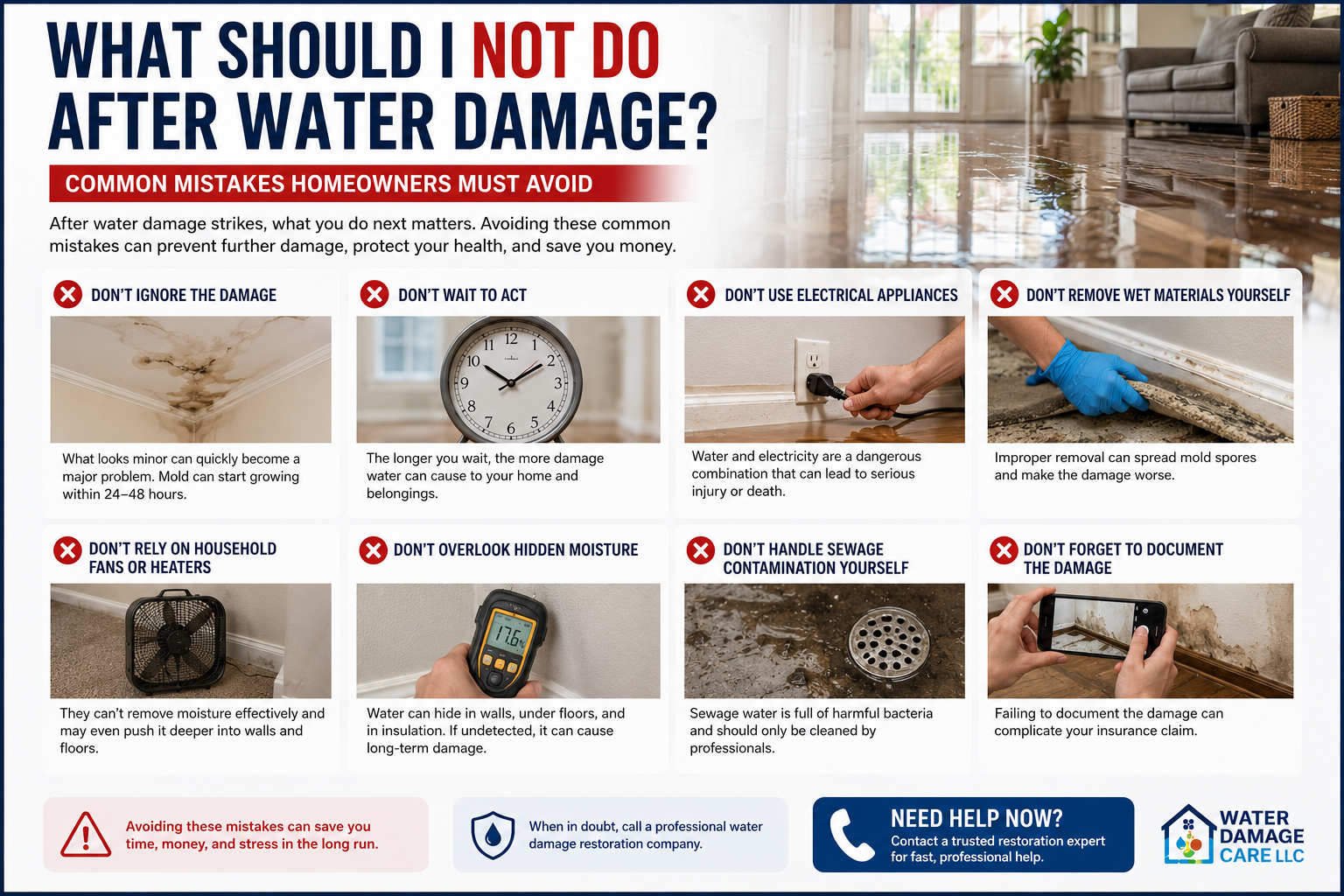
    Water damage can spread much faster than many homeowners realize. A small leak, overflowing appliance, or flooded basement can quickly affect drywall, flooring, insulation, and even the structural integrity of a property. Many people focus only on visible water, but hidden moisture behind walls and under floors often causes the most expensive problems later.

    Understanding what should i not do after water damage is important because certain mistakes can make cleanup more difficult, increase repair costs, and create long-term issues like mold growth and weakened materials. Acting quickly and safely helps reduce damage while protecting your home and health.


    Why Acting Quickly After Water Damage Matters

    Water damage does not stay in one place. Moisture naturally spreads through porous materials such as drywall, carpeting, wood framing, and insulation. Even a small amount of trapped moisture can continue moving deeper into the structure over time.

    The longer water remains untreated, the greater the risk of:

    • mold growth
    • structural weakening
    • warped flooring
    • damaged drywall
    • unpleasant odors
    • bacterial contamination

    Fast action is one of the most important parts of water mitigation because delays often turn minor repairs into major restoration projects.

    How Water Damage Spreads Through a Property

    Water travels through materials faster than many people expect. Gravity pulls moisture downward into subfloors and lower levels, while porous materials absorb and hold water long after surfaces appear dry.

    For example:

    • drywall absorbs moisture quickly
    • insulation traps hidden dampness
    • wooden framing may swell and weaken
    • laminate flooring can separate and buckle

    In many cases, damage continues developing behind walls even when visible water disappears. This is why professional moisture inspections are often necessary after flooding or leaks.

    Standing water can also create secondary damage by increasing indoor humidity levels. Excess humidity allows moisture to spread into nearby rooms and unaffected materials.

    Professional water extraction and removal services are often recommended when large amounts of standing water are present because rapid removal helps limit structural deterioration and mold risks.


    The First 24–48 Hours After Flooding

    The first two days after water exposure are extremely important. Moisture left untreated during this period can significantly increase restoration costs and safety risks.

    Within the first 24–48 hours:

    • mold spores may begin growing
    • drywall can start deteriorating
    • wood materials may swell or warp
    • odors can develop
    • bacteria may spread in contaminated water situations

    Homes affected by gray water or black water contamination face even greater health concerns because floodwater may contain sewage, chemicals, or harmful microorganisms.

    Quick drying is critical because wet building materials continue absorbing moisture until humidity levels are controlled. Professional structural drying and dehumidification equipment is designed to remove trapped moisture from walls, flooring, and structural cavities more effectively than standard household fans.


    What You Should Never Do After Water Damage

    After flooding or leaks, many homeowners unintentionally make mistakes that worsen the situation. Some actions delay drying, hide hidden moisture, or create safety hazards that increase long-term damage.

    Understanding what should i not do after water damage can help prevent avoidable repair costs and health risks.

    Do Not Ignore Standing Water

    One of the biggest mistakes after flooding is leaving standing water untreated for too long. Even shallow water can quickly soak into flooring, baseboards, drywall, and furniture.

    Ignoring standing water may lead to:

    • mold growth
    • floor damage
    • structural weakening
    • contamination spread
    • persistent odors

    Floodwater can also become dangerous if electrical systems or appliances are nearby. Wet surfaces create slip hazards, especially in basements and heavily affected rooms.

    The longer standing water remains inside a property, the more difficult the drying and restoration process becomes.


    Do Not Use Electrical Appliances in Wet Areas

    Water and electricity create serious safety hazards. Using electronics or plugged-in appliances near wet surfaces may increase the risk of electric shock or fire.

    Avoid using:

    • extension cords
    • floor fans plugged into wet outlets
    • wet appliances
    • exposed power strips
    • damaged electrical systems

    If flooding affects electrical outlets, wiring, or breaker panels, professional inspection is strongly recommended before restoring power to the area.

    Safety should always come before cleanup.


    Do Not Wait Too Long to Start Drying

    Many homeowners assume water will dry naturally over time. Unfortunately, trapped moisture often remains hidden long after surfaces feel dry to the touch.

    Delaying the drying process can:

    • increase mold growth risks
    • damage structural materials
    • weaken drywall
    • cause flooring separation
    • create long-term odor problems

    Moisture trapped behind walls or beneath flooring is especially dangerous because it may remain unnoticed for weeks. In some cases, homeowners only discover hidden water damage after staining, bubbling paint, or mold appears later.

    Professional drying equipment helps reduce indoor humidity and remove hidden moisture more effectively than household tools.


    Common DIY Water Damage Mistakes

    DIY cleanup may seem like a quick solution, but improper drying methods often leave hidden moisture behind. Many restoration problems occur because water damage was only partially addressed during the initial cleanup phase.

    Using Household Fans Incorrectly

    Standard household fans are not designed for serious water damage restoration. While they may help circulate air, they often cannot remove deep moisture trapped inside walls, insulation, or subflooring.

    Improper fan placement may also:

    • spread moisture into unaffected rooms
    • circulate dust and mold spores
    • increase humidity in enclosed spaces

    Industrial air movers and dehumidifiers are designed to create controlled airflow that supports proper structural drying.


    Painting Over Water Damage

    Some homeowners attempt to cover stains or damaged areas with paint before fully resolving the moisture problem. This only hides visible signs temporarily while moisture continues damaging materials underneath.

    Painting over water damage can:

    • trap moisture inside walls
    • allow mold growth to continue
    • cause peeling or bubbling paint later
    • hide worsening structural issues

    Before repairs begin, affected materials should be completely dry and inspected for hidden damage.


    Throwing Away Damaged Materials Too Early

    After flooding, many people immediately discard damaged belongings and materials before documenting the damage properly. This can create insurance complications later.

    Before disposing of damaged items:

    • take detailed photos
    • document affected rooms
    • create an inventory list
    • save receipts for emergency expenses

    Proper documentation may help support insurance claims and restoration assessments.


    Assuming the Area Is Dry When It Looks Dry

    Visible dryness does not always mean the structure is fully dry. Moisture can remain trapped inside:

    • drywall cavities
    • insulation
    • subfloors
    • wooden framing
    • beneath flooring materials

    Hidden moisture is one of the leading causes of delayed mold growth after water damage.

    Professional moisture monitoring tools help identify damp areas that cannot be seen during visual inspections alone. Detecting hidden moisture early helps prevent long-term structural and indoor air quality problems.


    Water Damage Safety Risks Homeowners Often Miss

    Many water damage hazards are not immediately visible. Even after standing water disappears, lingering moisture and contamination may continue affecting the property.

    Contaminated Water Exposure

    Not all floodwater is clean. Water from sewage backups, storms, appliances, or overflowing drains may contain harmful bacteria and contaminants.

    Floodwater is generally categorized as:

    • clean water
    • gray water
    • black water

    Black water contamination poses the highest health risk because it may contain sewage and dangerous microorganisms.

    Direct contact with contaminated water should always be avoided.


    Mold Exposure After Flooding

    Mold growth can begin surprisingly fast after water exposure, especially in warm and humid conditions. Once mold develops, spores may spread through the air and affect indoor air quality.

    Common signs of mold after water damage include:

    • musty odors
    • dark spotting on walls or ceilings
    • allergy-like symptoms
    • worsening respiratory irritation

    Mold problems often develop in hidden areas where moisture remains trapped for extended periods.


    Structural Safety Concerns

    Water can weaken building materials over time, especially when moisture reaches framing, ceilings, and support structures.

    Warning signs of structural issues may include:

    • sagging ceilings
    • soft drywall
    • warped flooring
    • swollen baseboards
    • cracking paint
    • unstable surfaces

    Ignoring these warning signs may allow damage to spread further throughout the property.

    What You Should Do Instead After Water Damage

    Knowing what should i not do after water damage is important, but understanding the correct recovery steps is equally valuable. Fast and organized action can reduce structural damage, lower restoration costs, and help prevent mold growth from spreading throughout the property.

    The goal after water exposure is to:

    • protect safety
    • stop additional damage
    • remove moisture quickly
    • restore proper indoor conditions

    Taking the right steps early can make a major difference in the overall recovery process.


    Shut Off Utilities If Safe

    If water has reached electrical outlets, appliances, or wiring, safety should be the first priority. Electricity and standing water create serious shock hazards that should never be ignored.

    If it is safe to access the breaker panel:

    • turn off electricity to affected areas
    • avoid stepping into deep water near outlets
    • unplug electronics only if the area is completely dry

    Gas appliances and water heaters should also be inspected if flooding has occurred nearby.

    When conditions appear unsafe, professional assistance is strongly recommended before entering heavily affected spaces.


    Remove Excess Water Quickly

    Standing water should be removed as quickly as possible to reduce additional damage. Water that remains inside a property continues soaking into structural materials and increases humidity throughout the building.

    Fast water removal helps reduce:

    • flooring damage
    • drywall deterioration
    • mold growth risks
    • bacterial contamination
    • unpleasant odors

    Professional water extraction and removal services use industrial pumps and specialized extraction equipment to remove water more efficiently than household tools.

    Quick extraction is especially important in:

    • flooded basements
    • burst pipe situations
    • appliance overflows
    • storm-related flooding

    Document the Damage for Insurance

    One of the most overlooked steps after flooding is proper documentation. Insurance companies often require detailed records of the damage before repairs and disposal begin.

    Helpful documentation includes:

    • photos of affected rooms
    • videos of standing water
    • damaged furniture and belongings
    • moisture stains
    • damaged flooring and drywall
    • repair receipts and emergency expenses

    Keeping organized records may help simplify the claims process and support restoration assessments later.

    Avoid discarding heavily damaged items until documentation is complete whenever possible.


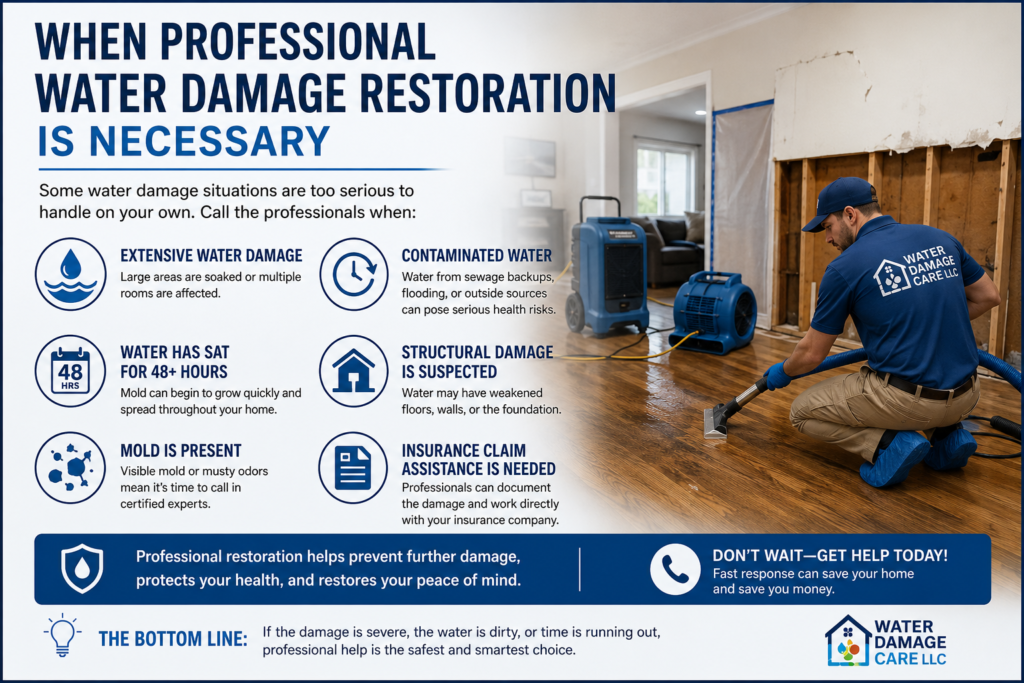
    When Professional Water Damage Restoration Is Necessary

    what should i not do after water damage

    Minor spills and small leaks may sometimes be manageable without professional help, but larger water damage situations often require specialized drying equipment and moisture detection tools.

    Hidden moisture is one of the biggest reasons professional restoration becomes necessary. Even when surfaces appear dry, water may remain trapped inside walls, flooring systems, and insulation.

    Professional restoration teams are trained to identify these hidden issues before they become larger structural or mold problems.


    Signs You Need Professional Help

    Some warning signs indicate the damage may be more serious than it initially appears.

    Professional restoration may be necessary if you notice:

    • large areas of standing water
    • strong musty odors
    • bubbling paint or drywall
    • warped flooring
    • ceiling stains
    • visible mold growth
    • sewage contamination
    • recurring moisture problems

    Flooded basements and long-term leaks often require advanced drying methods because moisture can spread deep into structural materials.

    If the water source is unclear, professional leak detection services may help identify hidden plumbing leaks or moisture intrusion points before repairs begin.


    Professional Equipment vs Household Tools

    Many homeowners attempt to dry water damage using standard fans or portable dehumidifiers. While these tools may help with small surface moisture, they are often not strong enough for deeper structural drying.

    Household EquipmentProfessional Restoration Equipment
    Basic fansIndustrial air movers
    Small dehumidifiersCommercial dehumidification systems
    Visual inspectionMoisture meters & thermal imaging
    Surface drying onlyDeep structural drying
    Limited airflow controlControlled drying environments

    Professional drying systems are designed to:

    • reduce humidity levels
    • increase evaporation
    • monitor moisture content
    • dry hidden structural cavities
    • prevent secondary damage

    Professional structural drying and dehumidification methods are especially important after significant flooding or prolonged water exposure.


    How Professionals Prevent Long-Term Damage

    Water damage restoration is not only about removing visible water. The larger goal is preventing future structural issues, hidden moisture problems, and mold growth.

    Professional mitigation processes focus on:

    • moisture detection
    • controlled drying
    • contamination prevention
    • material preservation
    • indoor air quality improvement

    Early mitigation often reduces the need for major reconstruction later.


    Moisture Detection and Monitoring

    Hidden moisture is one of the most difficult parts of water damage recovery. Walls, insulation, flooring systems, and framing may remain damp long after visible water disappears.

    Professional restoration teams use:

    • moisture meters
    • thermal imaging cameras
    • humidity monitoring equipment
    • moisture mapping techniques

    These tools help identify damp areas that may otherwise go unnoticed.

    Professional moisture monitoring is especially important after:

    • slow leaks
    • storm flooding
    • appliance failures
    • basement flooding
    • roof leaks

    Monitoring moisture levels throughout the drying process helps ensure materials reach safe drying standards before repairs begin.


    Structural Drying Process

    Structural drying is a controlled process designed to remove moisture from affected building materials safely and efficiently.

    This process may include:

    • industrial air movers
    • dehumidification systems
    • humidity control
    • airflow management
    • material moisture testing

    Without proper drying, trapped moisture may continue damaging the property even after visible water is removed.

    Drying structural materials correctly can help preserve:

    • drywall
    • wood framing
    • flooring systems
    • cabinetry
    • insulation

    Professional drying also reduces the likelihood of future mold growth and odor problems.


    Basement Flood Recovery Considerations

    Basements are especially vulnerable to water damage because moisture naturally moves downward into lower levels of a structure.

    Flooded basements may experience:

    • foundation moisture intrusion
    • hidden wall cavity moisture
    • flooring damage
    • persistent humidity
    • mold growth risks

    Basement flooding should never be underestimated because moisture can remain trapped for long periods in enclosed lower-level spaces.

    Professional basement flood cleanup services often include:

    • water extraction
    • structural drying
    • dehumidification
    • moisture inspection
    • odor control

    Addressing basement moisture quickly helps reduce long-term structural concerns and indoor air quality issues.


    How to Reduce Future Water Damage Risks

    Although not every water damage event can be prevented, regular maintenance and early inspections can reduce the likelihood of serious flooding and hidden moisture problems.

    Routine Home Inspections

    Checking the property regularly may help identify small problems before they become major restoration issues.

    Important areas to inspect include:

    • plumbing connections
    • appliance hoses
    • water heaters
    • roofing materials
    • windows and seals
    • basement walls
    • crawl spaces

    Early leak detection often prevents extensive structural damage later.


    Plumbing Maintenance Tips

    Plumbing failures are one of the leading causes of residential water damage.

    Helpful prevention steps include:

    • replacing worn hoses
    • monitoring water pressure
    • checking for corrosion
    • inspecting shut-off valves
    • repairing small leaks quickly

    Even slow leaks can create hidden moisture problems over time.


    Basement Waterproofing Considerations

    Basements are commonly affected by groundwater intrusion and excess humidity.

    Waterproofing improvements may include:

    • sump pumps
    • drainage systems
    • foundation sealing
    • gutter maintenance
    • downspout extensions

    Reducing moisture around the foundation can help lower basement flooding risks during storms and heavy rainfall.


    Monitoring Humidity Levels Indoors

    Indoor humidity plays a major role in mold prevention and moisture control.

    High humidity may cause:

    • condensation
    • musty odors
    • mold growth
    • material deterioration

    Using dehumidifiers and maintaining proper ventilation may help keep indoor moisture levels under control throughout the year.


    FAQs

    How fast can water damage become serious?

    Water damage can begin affecting drywall, flooring, and insulation within hours, while mold may start developing within 24–48 hours.

    Can I clean up water damage myself?

    Small spills may be manageable, but larger flooding or hidden moisture often requires professional drying and moisture monitoring.

    Is it safe to stay in a house with water damage?

    It depends on the severity. Electrical hazards, mold growth, and contaminated water may create unsafe indoor conditions.

    What should I avoid doing after flooding?

    Avoid using electrical appliances near wet areas, delaying cleanup, or assuming surfaces are fully dry without inspection.

    Can water damage spread behind walls?

    Yes, moisture can travel through drywall, insulation, and subfloors even when visible surfaces appear dry.

    Does water damage always cause mold?

    Not always, but untreated moisture significantly increases the risk of mold growth and indoor air quality problems.

    When should I call a water damage professional?

    Professional help is recommended for standing water, basement flooding, mold odors, sewage contamination, or hidden moisture concerns.

    Conclusion

    Understanding what should i not do after water damage can help prevent costly repairs, mold growth, and long-term structural problems. Avoiding common mistakes like delaying cleanup, ignoring hidden moisture, or using unsafe drying methods is essential for protecting your home and indoor air quality. Fast action, proper drying, and professional inspection when necessary can significantly reduce damage and support a safer recovery process.

    References

    • The Institute of Inspection Cleaning and Restoration Certification (IICRC) establishes industry standards and best practices for professional water damage restoration and cleaning procedures. IICRC Official Website
    • The Environmental Protection Agency (EPA) provides guidance on mold prevention, indoor air quality, and moisture-related health concerns after flooding and water damage. EPA Official Website
    • The Federal Emergency Management Agency (FEMA) offers flood recovery recommendations, emergency preparedness resources, and disaster safety information for homeowners. FEMA Official Website