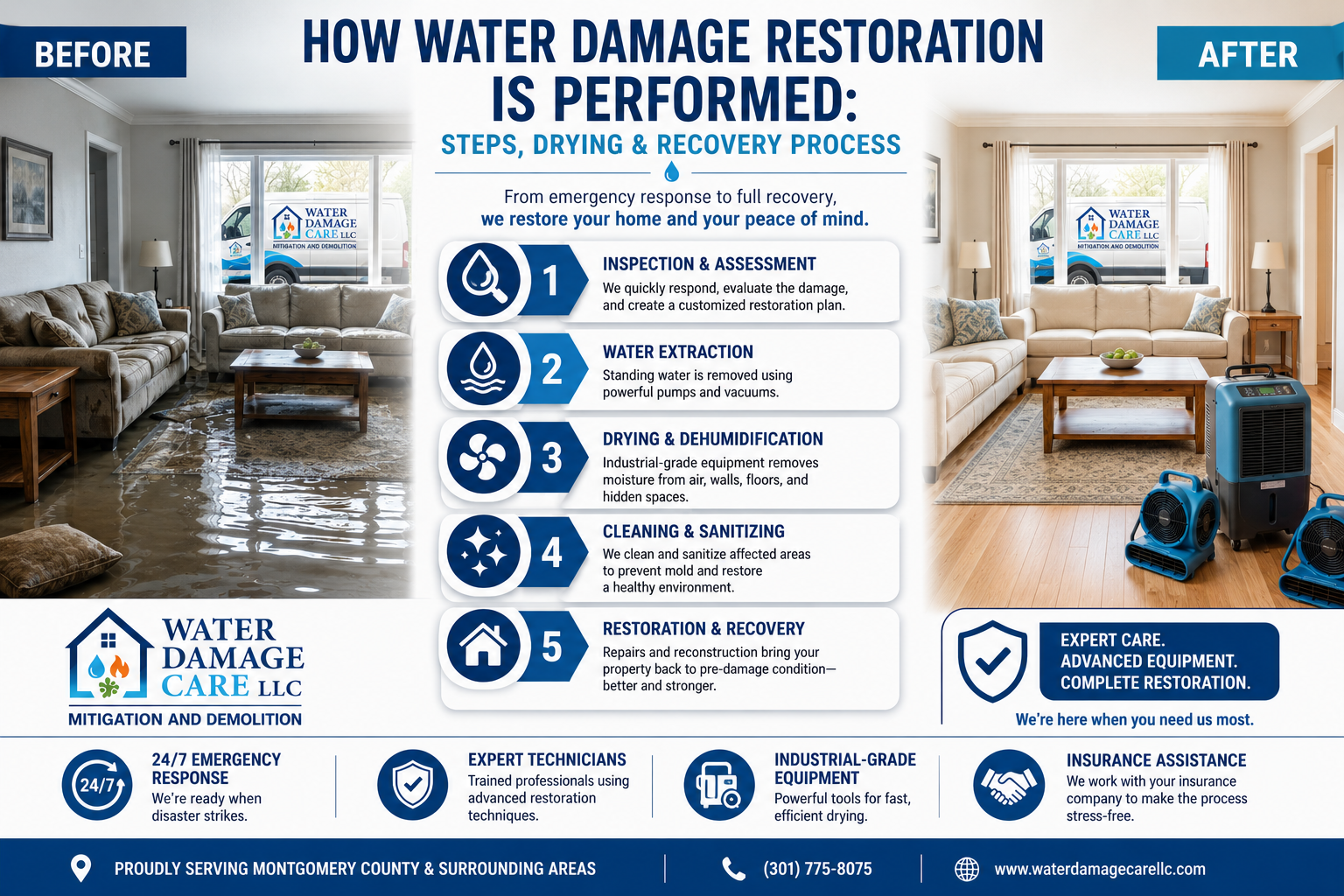
How water damage restoration is performed involves a step-by-step process that includes inspection, water extraction, moisture detection, structural drying, cleaning, sanitizing, and repairs. Professional restoration helps remove visible and hidden moisture, prevent mold growth, protect structural materials, and restore a property to its pre-damage condition as quickly and safely as possible.
Water damage restoration is performed through a series of steps that include inspection, water extraction, moisture detection, drying, dehumidification, cleaning, and repairs. The goal is to remove water, prevent further damage, eliminate hidden moisture, and restore the property to its pre-damage condition.
What Is Water Damage Restoration?
Water damage restoration is the process of returning a property to its pre-damage condition after water intrusion. It involves more than simply removing standing water, as hidden moisture can remain behind walls, under floors, and inside structural materials.
Professional restoration combines water removal, drying, cleaning, and repair procedures to prevent long-term damage. The exact process depends on the source of the water and the extent of the affected areas.
Common causes of water damage include:
- Burst pipes
- Roof leaks
- Appliance failures
- Storm flooding
- Plumbing issues
How Water Damage Restoration Is Performed Step by Step
Water damage restoration follows a structured process designed to remove water, eliminate moisture, and restore affected materials. Each step plays an important role in preventing additional damage and helping the property recover safely.
While every project is different, most restoration jobs follow the same general sequence. The process begins with an inspection and continues through drying, cleaning, and final repairs.
The main restoration steps include:
- Inspection and assessment
- Water extraction
- Moisture detection
- Structural drying
- Cleaning and sanitizing
- Restoration and repairs
Initial Inspection and Damage Assessment
The first step is identifying the source of the water and evaluating the affected areas. Restoration professionals inspect the property, determine the extent of damage, and create a plan for the recovery process.
- Locate affected materials
- Identify water category
- Check for hidden moisture
- Develop a restoration strategy
Water Extraction
After the assessment, standing water is removed using specialized extraction equipment. Fast water removal helps reduce damage and shortens the overall restoration timeline.
In severe situations, professional water extraction and removal services may be necessary to eliminate standing water and prepare the property for the drying phase.
- Remove standing water
- Reduce material saturation
- Protect structural components
- Prepare for drying
Moisture Detection
Even after visible water is removed, moisture can remain trapped inside building materials. Technicians use specialized tools to locate hidden moisture before the drying process begins.
- Moisture meters
- Thermal imaging
- Moisture mapping
- Drying verification
Structural Drying and Dehumidification
The drying stage removes remaining moisture from walls, floors, ceilings, and other structural materials. Air movers and dehumidifiers work together to create controlled drying conditions.
Professional structural drying and dehumidification techniques help prevent secondary damage and support a more complete restoration process.
- Increase airflow
- Remove excess humidity
- Dry structural materials
- Prevent secondary damage
Cleaning and Sanitizing
Once the affected materials are dry, the next step is cleaning and sanitizing the property. This helps remove dirt, bacteria, contaminants, and odors that may have been introduced by the water intrusion.
- Clean affected surfaces
- Apply antimicrobial treatments
- Remove lingering odors
- Improve indoor air quality
Restoration and Repairs
The final restoration stage focuses on repairing or replacing damaged materials. Depending on the severity of the damage, this may involve minor repairs or larger reconstruction work.
- Replace damaged drywall
- Repair flooring materials
- Restore affected areas
- Return the property to its original condition
How Long Does Water Damage Restoration Take?
The timeline for water damage restoration varies based on the amount of water, the size of the affected area, and the materials involved. Small water incidents may take only a few days, while larger losses can require several weeks.
Hidden moisture can also extend the restoration process because materials must reach acceptable moisture levels before repairs begin. Professional monitoring helps ensure the property is fully dry before moving forward.
Factors that affect restoration time include:
- Extent of water damage
- Type of water involved
- Building materials affected
- Amount of hidden moisture
- Weather and humidity conditions
Why Professional Water Damage Restoration Matters
Professional restoration helps ensure that all visible and hidden moisture is properly addressed. Without thorough drying and cleaning, water damage can continue affecting a property long after the initial incident.
Experienced technicians use specialized equipment and proven drying methods to reduce risks and improve restoration results. Their expertise helps protect both the property and the people inside it.
Benefits of professional restoration include:
- Faster recovery
- Reduced risk of mold growth
- Complete moisture removal
- Protection of structural materials
- Long-term cost savings
Conclusion
Water damage restoration is a multi-step process that includes inspection, water removal, moisture detection, drying, cleaning, and repairs. Each stage plays an important role in restoring a property and preventing additional damage.
Acting quickly after water damage occurs can significantly improve restoration outcomes. By following a professional restoration process, property owners can help protect their investment and return their home or business to a safe, dry condition.
FAQs
How is water damage restoration performed?
Water damage restoration involves inspection, water removal, drying, cleaning, and repairs to restore a property after water intrusion.
How long does water damage restoration take?
Most projects take a few days to several weeks, depending on the extent of the damage and drying requirements.
What is the first step in water damage restoration?
The process begins with a professional inspection to assess the damage and create a restoration plan.
Can hidden moisture remain after water removal?
Yes. Moisture can remain behind walls, under flooring, and inside structural materials if not properly detected and dried.
Why is professional drying important?
Professional drying helps prevent mold growth, structural damage, and other long-term issues caused by trapped moisture.