Water mitigation is the emergency work that stops water damage from spreading: stopping the source, extracting water and drying the structure. Reconstruction is rebuilding what had to be removed, like drywall, flooring and cabinets. Water restoration is the broader term for the whole process, from the first call to the finished repair.
After a burst pipe or a flooded basement, homeowners hear these three terms from insurers, adjusters and contractors, often used as if they mean the same thing. They don’t, and knowing the difference helps you understand your estimate, your claim and what should happen next.
Water mitigation: stop it and dry it
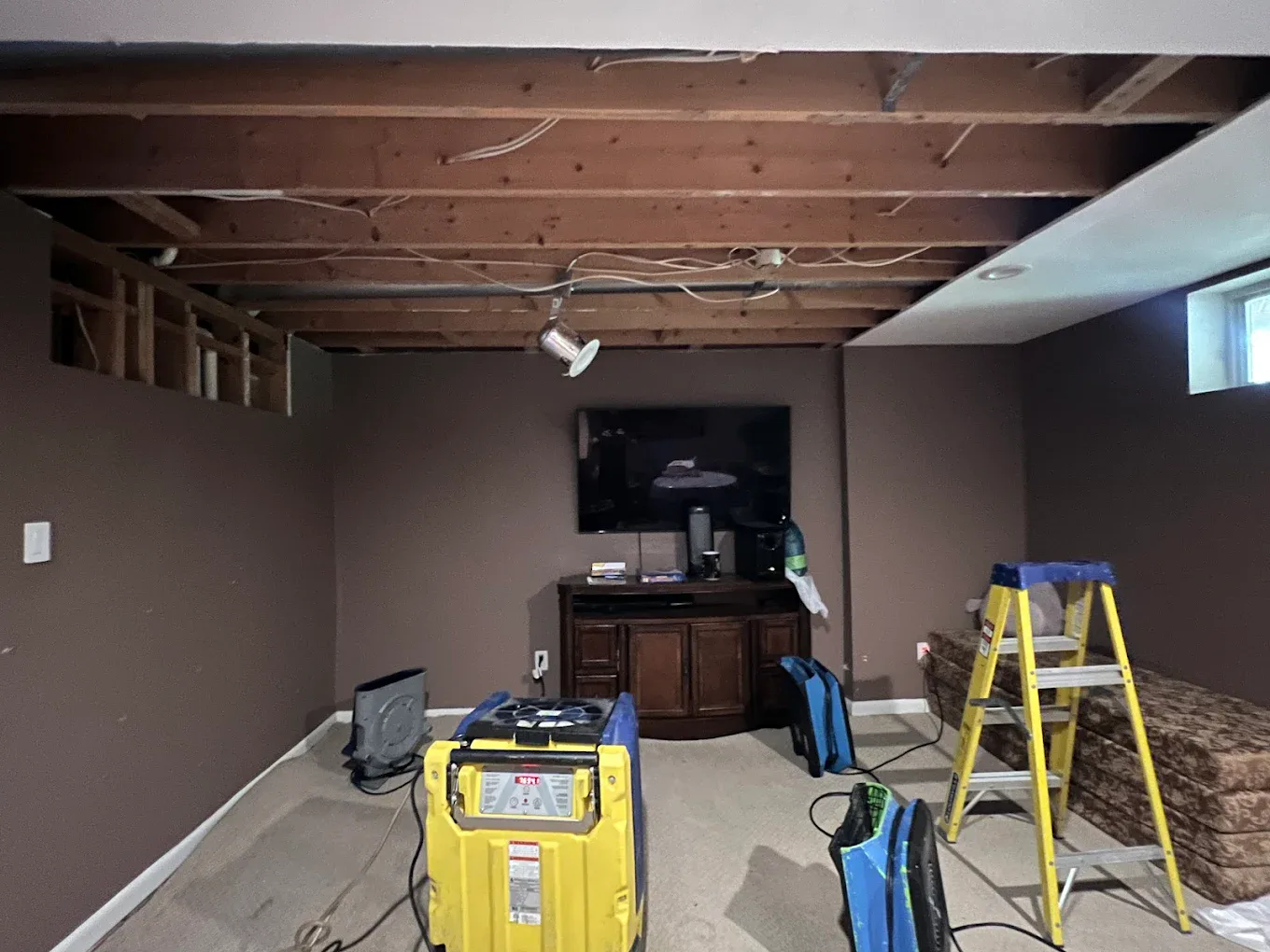
Mitigation is the first stage, and it’s urgent. Its only goal is to keep the damage from getting worse. It usually includes:
- Stopping the source of the water, or making it safe.
- Extracting standing water from floors, carpet and basements.
- Finding hidden moisture with moisture meters and infrared cameras.
- Removing materials that can’t be dried, like soaked carpet pad, swollen baseboards and the bottom of wet drywall.
- Drying the structure with air movers and dehumidifiers, following the IICRC S500 standard.
- Applying antimicrobial treatment where needed.
- Recording moisture readings every day until materials test dry.
Timing: mitigation should start within hours, and drying usually takes three to five days. The EPA recommends drying water-damaged materials within 24 to 48 hours to prevent mold.
Reconstruction: put it back together
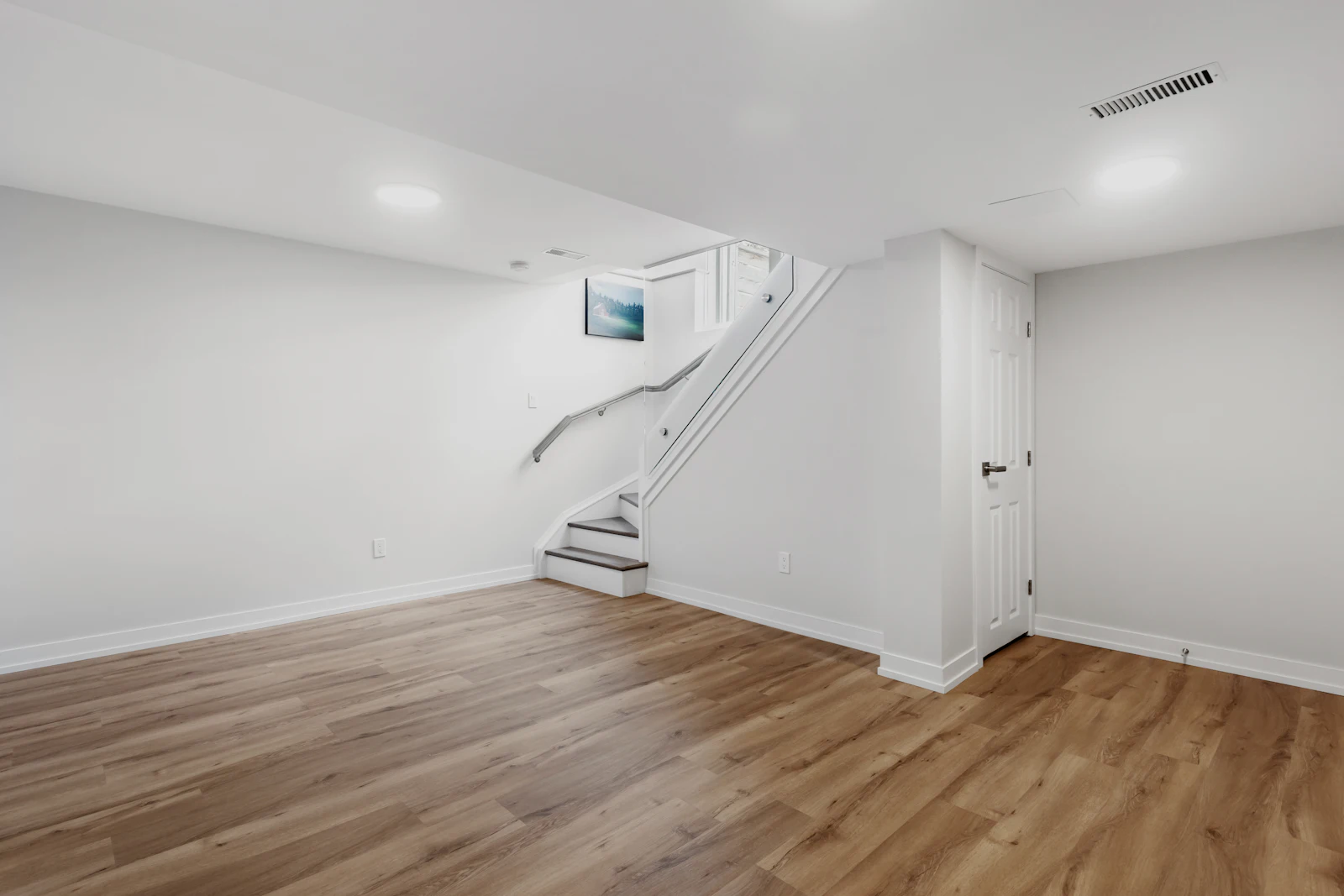
Reconstruction starts once the home is dry, which is confirmed by readings, not by how the room looks. It replaces what mitigation had to remove, and it can include:
- Framing and subfloor repairs.
- Drywall, ceilings, insulation and paint.
- Flooring of every kind.
- Cabinets, trim and finish carpentry.
- Kitchen and bathroom rebuilds, or remodels if you want to change the space.
- Permits and inspections where required.
Timing: anywhere from a few days for a small repair to several weeks for a finished basement or kitchen, depending on materials, permits and insurance approval.
Water restoration: the umbrella term
“Water damage restoration” is the term most people search for, and it usually means the whole process, from mitigation through the final repair. Some companies only do the mitigation part and then hand you off to a separate contractor. Others, like Water Damage Care, handle both stages.
Side by side
- Purpose: mitigation prevents more damage; reconstruction repairs the damage that already happened.
- When: mitigation starts immediately; reconstruction starts after the home tests dry.
- Typical length: mitigation takes days; reconstruction takes days to weeks.
- What you get: mitigation produces a drying log, photos and an estimate; reconstruction produces a finished room.
- Licensing: in Maryland, rebuilding and home improvement work requires an MHIC license.
Why the order matters
Rebuilding too early is one of the most expensive mistakes after water damage. Drywall or flooring installed over damp framing or subfloor traps moisture and can lead to mold, odors and failed finishes. That’s why the drying record matters: it shows when the structure is ready to rebuild, and it gives your insurer a clear record of what was affected.
One company or two?
You can use separate companies for mitigation and reconstruction. The advantage of one licensed company is continuity: the team that photographed and measured the damage writes the rebuild estimate, there’s one point of contact for you and your adjuster, and nothing gets lost in a handoff. Water Damage Care is licensed for water mitigation and general contracting in Maryland and Washington, DC, and provides water mitigation in Northern Virginia.
Water Damage Care answers 24/7 across Montgomery County, Prince George’s, Howard and Frederick counties, Northern Virginia and Washington, DC. Call (240) 370-5440 and we give you an arrival time on the call.
Learn more: our water damage mitigation process · how a rebuild works · how water damage restoration is performed.
Frequently asked questions
Is water mitigation the same as water restoration?
Not exactly. Mitigation is the emergency stage: stopping the water, extracting it and drying the structure. Restoration is often used to describe the whole job, from mitigation through repairs. Reconstruction is the rebuilding stage after everything is dry.
Do I need mitigation if the water is already gone?
Usually, yes. Standing water is only part of the problem. Water soaks into drywall, insulation, subfloors and framing, and it stays there unless it is properly dried. Moisture readings show whether materials are actually dry before anything is closed up.
Can one company do both mitigation and reconstruction?
Yes, if it holds the right licenses. In Maryland, home improvement work requires a Maryland Home Improvement Commission (MHIC) license. Using one licensed company for both stages means the same team that documented the damage also scopes and rebuilds it.
Does insurance pay for mitigation and reconstruction separately?
Insurers often handle them as separate line items in the same claim. Mitigation is typically billed first, based on equipment, labor and the drying record, and the rebuild is estimated once the home is dry and the full damage is known.