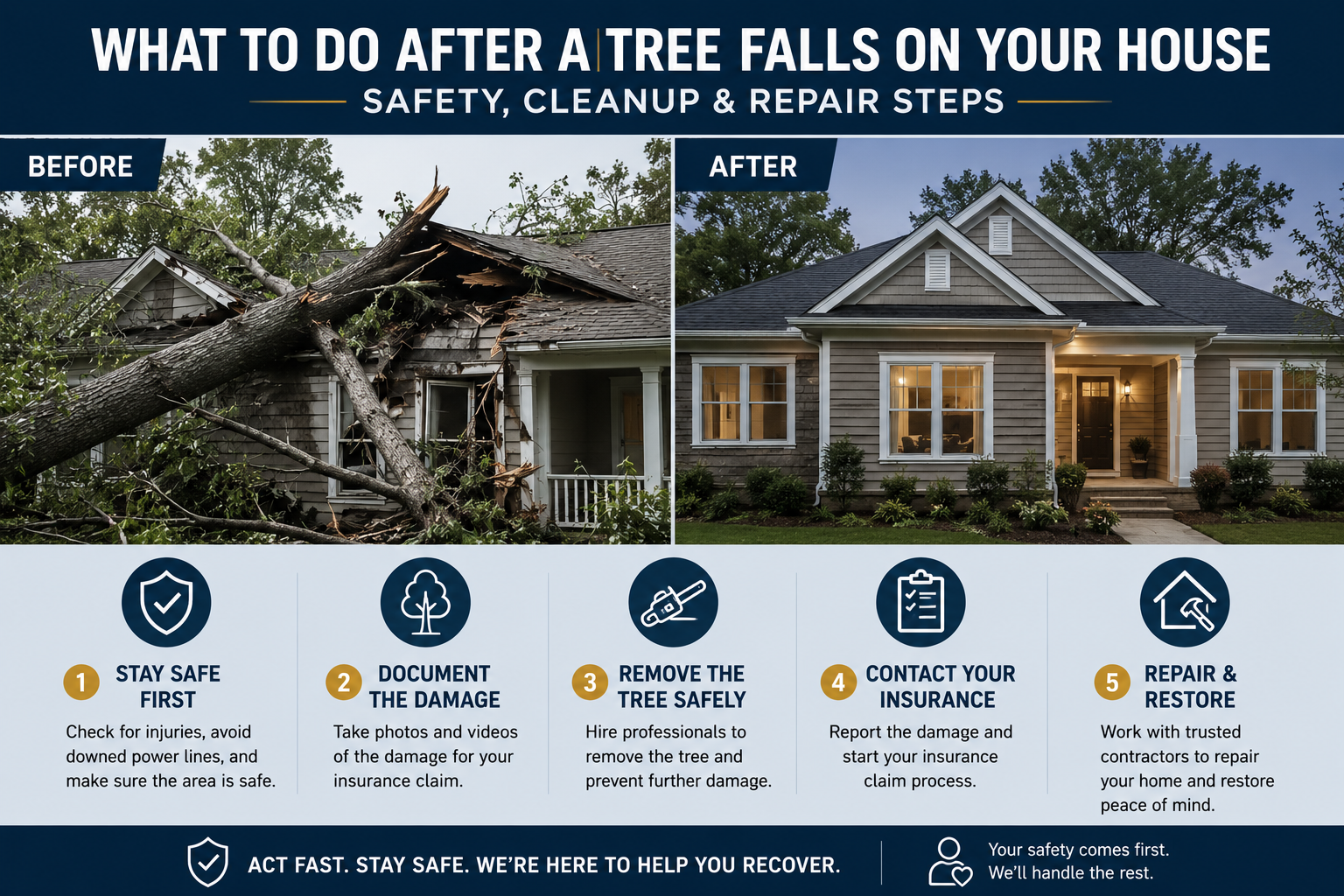
A fallen tree can cause serious damage within seconds, especially during storms, heavy winds, or severe weather conditions. Beyond the visible roof damage, a tree impact may also create hidden structural issues, electrical hazards, and water intrusion problems throughout the property.
Understanding what to do after a tree falls on your house can help reduce safety risks, prevent additional damage, and support a faster recovery process. Taking immediate action is important because delays may allow structural problems and moisture damage to become worse over time.
Prioritize Safety Immediately
Safety should always come first after a tree falls on a property. Structural instability, broken utility lines, and falling debris can create dangerous conditions both inside and outside the home.
Even if the damage appears minor at first, hidden problems may exist behind walls, ceilings, or roofing materials. Some structures may weaken significantly after the impact, especially if large branches or heavy sections of the tree remain on the roof.
Important safety concerns may include:
- unstable ceilings
- electrical hazards
- gas leaks
- falling debris
- broken glass
- water intrusion
Avoid rushing into damaged areas before checking for visible risks and unsafe conditions.
Check for Immediate Hazards
After the impact, carefully inspect the area from a safe distance. A fallen tree can damage electrical wiring, plumbing systems, roofing structures, and support beams without immediately collapsing the property.
Watch for warning signs such as:
- sparking wires
- burning smells
- gas odors
- sagging ceilings
- cracked walls
- leaning structures
If power lines are involved, stay far away from the area and contact emergency services immediately. Downed electrical lines can remain energized and extremely dangerous even if the neighborhood appears to have lost power.
Gas leaks are another serious concern after storm damage. If you notice a strong gas smell or hear hissing sounds, leave the property immediately and contact emergency responders.
Professional Structural Safety Inspection services are often recommended after major tree impacts because some forms of structural damage may not be immediately visible during a visual inspection alone.
Leave Unsafe Areas Quickly
Not every situation requires evacuation, but heavily damaged sections of the property should be avoided until professionals assess the structure. Roof impacts can weaken ceilings, walls, and support systems, increasing the risk of collapse.
Avoid entering:
- rooms beneath damaged roofing
- areas with sagging ceilings
- flooded sections of the property
- rooms with exposed wiring
- unstable upper floors
If severe structural damage is visible, temporarily leaving the property may be the safest option until emergency stabilization begins.
Families should also keep children and pets away from affected areas because loose debris, broken materials, and sharp objects may create additional hazards.
Contact Emergency Services and Utility Providers
Once immediate safety concerns are addressed, the next step is contacting emergency responders and utility providers if necessary. Utility damage after storms can create dangerous conditions that require immediate professional attention.
Quick communication is important because utility-related hazards may continue worsening after the initial impact.
You may need to contact:
- emergency services
- electric companies
- gas providers
- water utility providers
- restoration contractors
- insurance companies
Acting quickly can help reduce additional risks to both the property and nearby structures.
When to Call Emergency Responders
Some storm damage situations require immediate emergency assistance, especially when utilities or structural stability are involved.
Call emergency responders if you notice:
- downed power lines
- active fire or smoke
- strong gas odors
- severe roof collapse
- trapped occupants
- major flooding risks
Emergency crews can help secure dangerous areas and coordinate with utility providers before restoration work begins.
Do not attempt to remove large branches or unstable debris yourself, especially if the tree is resting on electrical systems or structural supports.
Shut Off Utilities If Safe
If conditions are safe and utilities are accessible, shutting off electricity, gas, or water may help prevent additional hazards after the tree impact.
However, utilities should only be turned off if:
- there is no standing water nearby
- the area is structurally stable
- electrical panels are safely accessible
Avoid touching:
- wet electrical panels
- exposed wiring
- damaged gas meters
- flooded outlets
Storm-related utility interruptions can affect heating, lighting, refrigeration, and communication systems inside the property.
Professional Temporary Power & Utility Solutions may help restore limited power access safely while permanent repairs and inspections are completed.
Document the Damage for Insurance
Proper documentation is one of the most important steps after storm-related property damage. Insurance companies often require detailed records before approving repairs and restoration work.
Taking photos and videos immediately can help preserve evidence before temporary repairs or cleanup begin.
Helpful documentation includes:
- roof damage
- broken windows
- interior ceiling damage
- fallen tree positioning
- water intrusion
- damaged belongings
Detailed records may also help contractors create more accurate restoration estimates later.
Take Photos and Videos Immediately
Photograph the damage from multiple angles while maintaining a safe distance from unstable areas. Visual documentation can help show the full extent of the damage before debris removal or emergency repairs begin.
Focus on:
- damaged roofing
- cracked walls
- exposed interiors
- collapsed ceilings
- standing water
- damaged furniture and contents
If weather conditions allow, continue documenting changes over time, especially if rain or moisture enters through exposed roof openings.
Avoid climbing onto the roof or entering unstable areas while taking photos.
Start the Insurance Claim Process
Contact your insurance provider as soon as possible after documenting the damage. Many policies require prompt reporting following storm-related incidents.
Important claim information may include:
- date of the storm
- photos and videos
- contractor assessments
- emergency repair receipts
- damaged item inventory
| Important Documentation | Why It Matters |
|---|---|
| Photos of damage | Supports insurance claims |
| Emergency repair receipts | May qualify for reimbursement |
| Inventory lists | Helps estimate losses |
| Inspection reports | Documents structural concerns |
Keeping organized records throughout the recovery process may help reduce delays during claim review and restoration planning.
Prevent Additional Property Damage
After the immediate emergency is under control, preventing secondary damage becomes a major priority. Roof openings and exposed structural areas can allow rain, moisture, debris, and pests to enter the property.
Without temporary protection, damage may spread quickly throughout the structure.
Additional exposure may lead to:
- water intrusion
- mold growth
- insulation damage
- ceiling deterioration
- warped flooring
- indoor humidity problems
Fast mitigation helps reduce restoration costs and long-term structural concerns.
Protect Open Roof Areas
A damaged roof can expose the interior of the property to rain and moisture within hours. Even small openings may allow water to spread into ceilings, insulation, drywall, and flooring systems.
Temporary stabilization methods may include:
- roof tarping
- sealing exposed openings
- covering broken windows
- securing loose materials
Professional Emergency Tarping & Board-Up services help provide temporary weather protection while permanent repairs are planned.
These emergency measures are especially important during ongoing storms or periods of heavy rain.
Why Fast Mitigation Matters
Water intrusion after roof damage can continue spreading long after the tree has been removed. Moisture trapped inside walls and ceilings may create hidden damage that becomes more expensive over time.
Fast mitigation helps reduce:
- mold growth risks
- structural weakening
- odor development
- material deterioration
- hidden moisture spread
Professional Water Intrusion Mitigation services may include emergency drying, moisture monitoring, and temporary stabilization to reduce secondary water damage after storm impacts.
The faster moisture is controlled, the lower the risk of long-term structural and indoor air quality problems.
Tree Removal and Debris Cleanup
Once the property is stabilized and immediate hazards are addressed, the next step is removing the fallen tree and clearing dangerous debris. This stage requires careful planning because trees resting on roofs or structural supports may continue placing pressure on weakened areas of the property.
Improper removal attempts can make the damage worse and create additional safety risks. Large branches and unstable debris may shift unexpectedly during cleanup, especially after storms with heavy rain or high winds.
Cleanup after a fallen tree often includes:
- removing heavy branches
- clearing roofing debris
- disposing of damaged materials
- securing access points
- checking for hidden hazards
Fast debris removal also helps restoration professionals inspect the structure more accurately and begin repairs sooner.
Why Professional Tree Removal Is Important
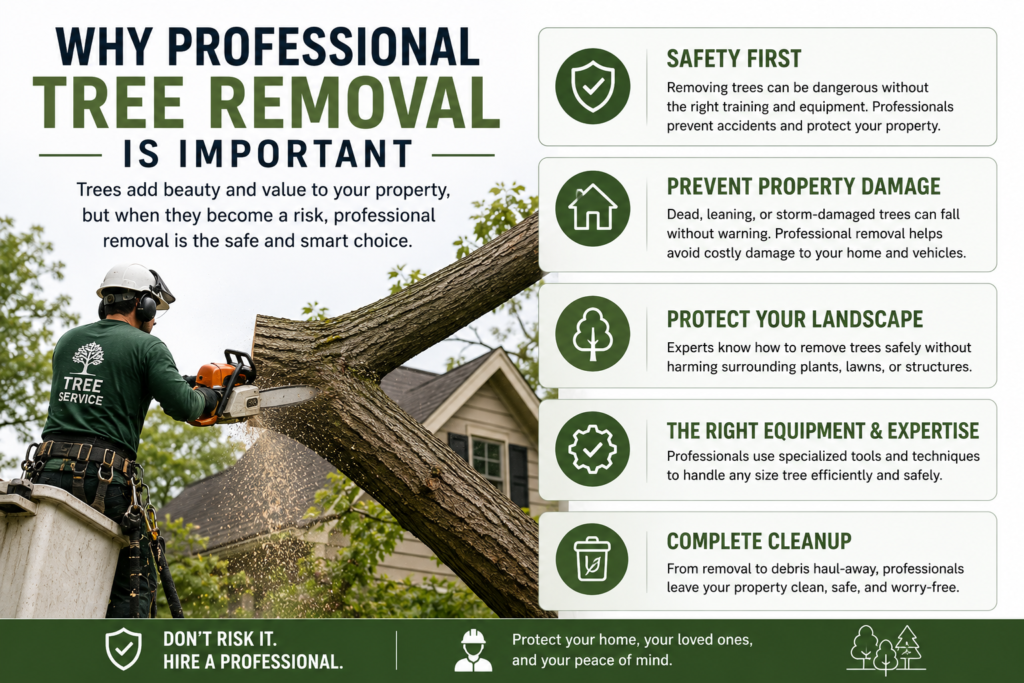
Removing a fallen tree from a house is not the same as normal yard cleanup. Large trees may place thousands of pounds of pressure on roofing systems, ceilings, and walls.
Attempting DIY tree removal may increase the risk of:
- roof collapse
- personal injury
- electrical accidents
- structural shifting
- further property damage
Specialized equipment is often required to safely stabilize and remove large sections of the tree without causing additional harm to the structure.
Professional Tree & Debris Removal services are designed to safely manage unstable trees, broken branches, and storm debris while reducing further damage to the property.
Restoration crews may also coordinate with utility providers if power lines or service connections are involved in the cleanup process.
Clearing Debris Safely
Debris cleanup usually continues after the main tree removal process is completed. Broken roofing materials, insulation, shattered glass, and damaged structural components may remain throughout the property.
Common debris after storm impacts may include:
- roofing shingles
- drywall fragments
- broken wood framing
- insulation materials
- tree limbs and branches
- damaged personal belongings
Removing debris quickly helps improve:
- safety conditions
- air quality
- property access
- moisture control
- restoration efficiency
Wet debris should also be removed promptly because trapped moisture may contribute to mold growth and indoor humidity problems.
Assessing Structural and Water Damage
After the fallen tree is removed, restoration professionals typically perform a more detailed inspection of the property. Some storm damage may remain hidden until debris is cleared and exposed areas become fully visible.
A tree impact can affect:
- roofing systems
- attic spaces
- ceilings
- framing
- insulation
- support structures
Even if the damage appears localized, vibrations and impact pressure may weaken nearby structural areas as well.
A complete inspection helps determine whether temporary repairs are enough or if major reconstruction is necessary.
Roof and Ceiling Damage
Roof damage is one of the most common problems after a tree falls on a house. Even small punctures may allow rainwater to spread into insulation, ceilings, and wall cavities.
Signs of roof-related damage may include:
- ceiling stains
- sagging drywall
- dripping water
- cracked ceilings
- visible roof openings
In some situations, the roof structure may weaken without collapsing immediately. Moisture can continue spreading through attic insulation and framing long after the initial impact.
Fast inspections help identify hidden water intrusion before major deterioration occurs.
Hidden Water Intrusion Risks
Water intrusion is one of the most overlooked problems after storm damage. Rainwater entering through roof openings may spread behind walls, beneath flooring, and inside insulation before becoming visible.
Hidden moisture may lead to:
- mold growth
- wood rot
- drywall deterioration
- insulation damage
- odor problems
Moisture often spreads farther than homeowners expect, especially when storms continue after the roof is damaged.
Professional moisture inspections may use:
- moisture meters
- thermal imaging cameras
- humidity monitoring equipment
These tools help identify damp areas that are not visible during basic inspections.
Mold Growth After Storm Damage
Mold growth may begin quickly when moisture remains trapped inside the property after storm damage. Warm and humid conditions create an environment where mold spores can spread rapidly.
Areas commonly affected include:
- attic insulation
- ceiling cavities
- drywall
- carpeting
- wooden framing
Common signs of mold development may include:
- musty odors
- dark discoloration
- peeling paint
- increased indoor humidity
Fast drying and moisture control are important for reducing the likelihood of long-term mold contamination after roof damage.
Temporary Repairs vs Permanent Repairs
After emergency stabilization, homeowners often need to decide between temporary repairs and full restoration work. Temporary repairs help reduce additional damage immediately, while permanent repairs focus on restoring the property completely.
Both stages are important because storm damage recovery often happens over time depending on:
- insurance approvals
- contractor availability
- structural assessments
- material replacement needs
Temporary repairs are commonly completed first to stabilize the structure and protect it from further weather exposure.
What Temporary Stabilization Includes
Temporary stabilization focuses on protecting the property until permanent restoration work begins.
Common emergency measures may include:
- roof tarping
- board-up protection
- debris removal
- temporary structural bracing
- water extraction
- utility safety measures
These steps help reduce:
- additional water intrusion
- weather exposure
- structural movement
- contamination risks
Temporary repairs are especially important when storms continue or when reconstruction cannot begin immediately.
| Temporary Repairs | Purpose |
|---|---|
| Roof tarping | Prevents rain intrusion |
| Board-up protection | Secures exposed openings |
| Emergency drying | Reduces moisture spread |
| Structural bracing | Stabilizes weakened areas |
When Full Repairs Are Necessary
Permanent repairs become necessary when structural materials are heavily damaged or no longer safe to restore.
Full reconstruction may include:
- roof replacement
- framing repairs
- drywall replacement
- insulation installation
- ceiling reconstruction
- flooring repairs
The extent of repairs depends on how severely the tree impact affected the structure.
Professional contractors often coordinate with insurance adjusters to evaluate:
- repair costs
- restoration scope
- structural safety concerns
- rebuilding requirements
Some properties may also require updated inspections before reconstruction is completed.
Working With Restoration Professionals
Storm damage recovery often involves multiple stages of cleanup, drying, inspection, and reconstruction. Restoration professionals help coordinate these processes while reducing safety risks and preventing secondary damage.
Professional restoration teams may assist with:
- emergency response
- debris removal
- structural drying
- temporary stabilization
- moisture monitoring
- repair planning
Working with experienced restoration professionals may also help simplify communication with insurance providers during the recovery process.
Emergency Response and Inspection
Fast emergency response is important after severe storm damage because delays may allow structural and moisture problems to worsen.
Restoration professionals typically begin with:
- structural inspection
- hazard identification
- moisture assessment
- temporary stabilization planning
Early inspections help identify urgent issues before cleanup and reconstruction begin.
Moisture Detection and Drying Equipment
Moisture control is often necessary after roof damage because rainwater may spread through multiple structural layers.
Professional drying systems may include:
- industrial dehumidifiers
- air movers
- moisture meters
- thermal imaging tools
These systems help reduce hidden moisture and improve drying efficiency throughout the property.
Coordinating Insurance and Repairs
Many restoration companies help homeowners coordinate repair documentation and inspection reports for insurance claims.
Helpful documentation may include:
- moisture readings
- structural assessments
- repair estimates
- emergency mitigation records
Clear documentation often helps support faster claim processing and repair approval decisions.
How to Reduce Future Storm Damage Risks
Although severe storms cannot always be prevented, routine maintenance may help reduce the likelihood of major property damage during high winds and heavy weather.
Routine Tree Maintenance
Trees located close to the property should be inspected regularly for:
- dead branches
- leaning trunks
- root instability
- storm damage
- overhanging limbs
Removing weak or damaged branches may help lower the risk of future impacts during storms.
Roof and Property Inspections
Routine roof inspections may help identify weak areas before severe weather causes additional damage.
Important inspection areas include:
- loose shingles
- flashing damage
- clogged gutters
- attic moisture
- drainage problems
Maintaining the roof properly can help reduce water intrusion risks during storms.
Storm Preparation Tips
Preparing the property before major storms may help minimize damage and improve safety during severe weather events.
Helpful storm preparation steps include:
- trimming nearby branches
- securing outdoor furniture
- checking emergency supplies
- reviewing insurance coverage
- inspecting utility shutoff locations
Proactive preparation can help reduce recovery time and restoration costs after future storms.
FAQs
What should you do first if a tree falls on your house?
Prioritize safety by avoiding damaged areas, checking for hazards, and contacting emergency services if utilities or structural damage are involved.
Is it safe to stay inside after a tree hits your home?
It depends on the severity of the damage. Roof collapse, electrical hazards, or unstable ceilings may require temporary evacuation.
Does homeowners insurance cover fallen tree damage?
Many homeowners insurance policies cover storm-related tree damage, but coverage depends on the policy and cause of the incident.
Can a fallen tree cause hidden structural damage?
Yes, tree impacts may weaken roofing systems, walls, ceilings, and support structures even when damage is not immediately visible.
Why is fast roof protection important after storm damage?
Temporary roof protection helps prevent rain, moisture intrusion, mold growth, and additional interior damage.
Can water damage happen after a tree falls on a roof?
Yes, rainwater can enter through roof openings and spread into insulation, ceilings, drywall, and flooring materials.
Who should remove a fallen tree from a house?
Professional storm damage and tree removal specialists should handle large tree removal due to structural and safety risks.
Conclusion
Knowing what to do after a tree falls on your house can help protect your safety and reduce long-term property damage. Fast action, proper documentation, emergency stabilization, and professional inspections are important after storm-related impacts. Addressing structural damage, water intrusion, and debris removal quickly can help prevent additional problems and support a smoother recovery process.
References
- The Federal Emergency Management Agency (FEMA) provides storm recovery and disaster safety guidance.
FEMA Official Website - The National Weather Service (NWS) shares severe weather preparedness and storm safety information.
National Weather Service Official Website - The Occupational Safety and Health Administration (OSHA) offers safety guidelines for storm cleanup and structural hazards.
OSHA Official Website