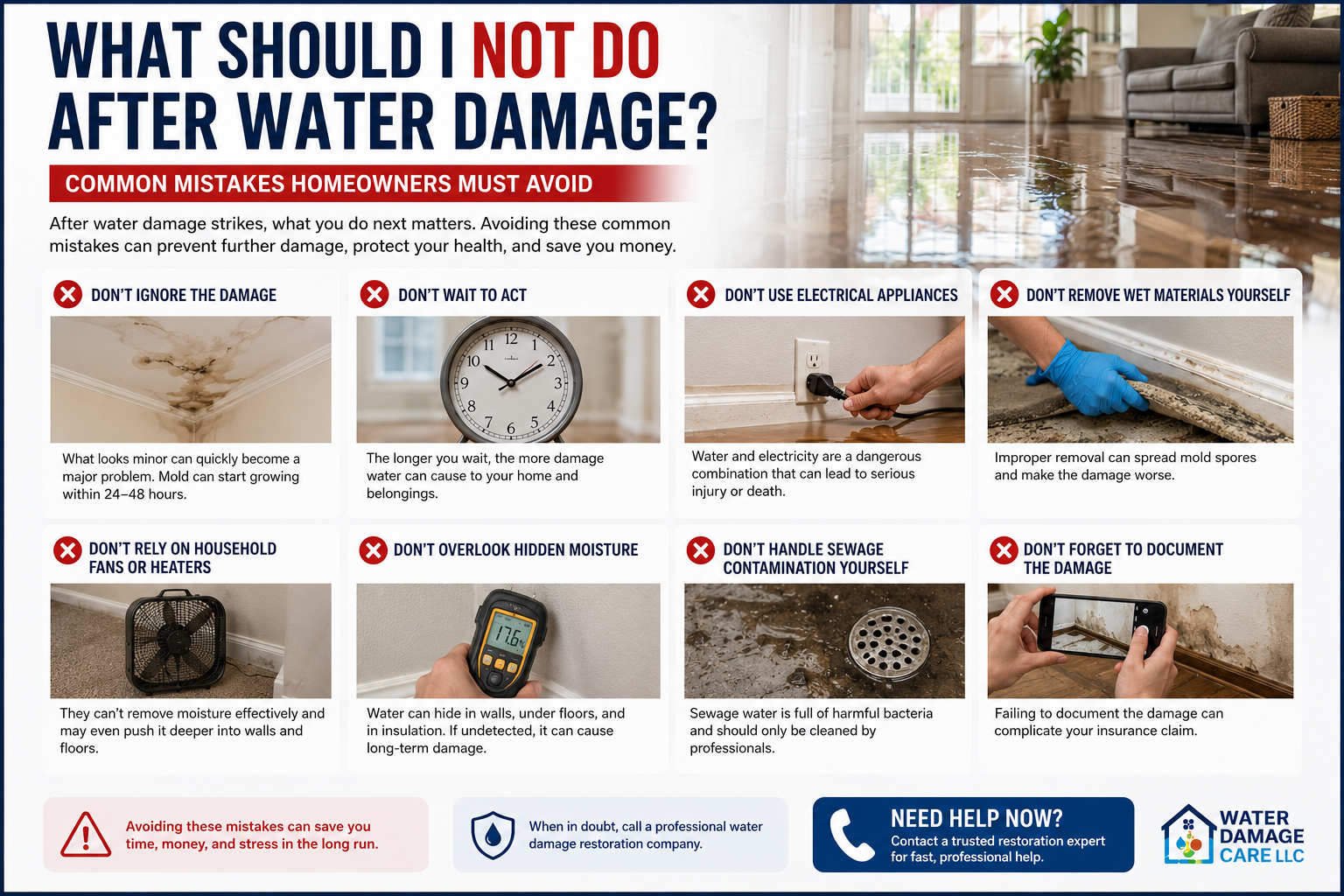
Water damage can spread much faster than many homeowners realize. A small leak, overflowing appliance, or flooded basement can quickly affect drywall, flooring, insulation, and even the structural integrity of a property. Many people focus only on visible water, but hidden moisture behind walls and under floors often causes the most expensive problems later.
Understanding what should i not do after water damage is important because certain mistakes can make cleanup more difficult, increase repair costs, and create long-term issues like mold growth and weakened materials. Acting quickly and safely helps reduce damage while protecting your home and health.
Why Acting Quickly After Water Damage Matters
Water damage does not stay in one place. Moisture naturally spreads through porous materials such as drywall, carpeting, wood framing, and insulation. Even a small amount of trapped moisture can continue moving deeper into the structure over time.
The longer water remains untreated, the greater the risk of:
- mold growth
- structural weakening
- warped flooring
- damaged drywall
- unpleasant odors
- bacterial contamination
Fast action is one of the most important parts of water mitigation because delays often turn minor repairs into major restoration projects.
How Water Damage Spreads Through a Property
Water travels through materials faster than many people expect. Gravity pulls moisture downward into subfloors and lower levels, while porous materials absorb and hold water long after surfaces appear dry.
For example:
- drywall absorbs moisture quickly
- insulation traps hidden dampness
- wooden framing may swell and weaken
- laminate flooring can separate and buckle
In many cases, damage continues developing behind walls even when visible water disappears. This is why professional moisture inspections are often necessary after flooding or leaks.
Standing water can also create secondary damage by increasing indoor humidity levels. Excess humidity allows moisture to spread into nearby rooms and unaffected materials.
Professional water extraction and removal services are often recommended when large amounts of standing water are present because rapid removal helps limit structural deterioration and mold risks.
The First 24–48 Hours After Flooding
The first two days after water exposure are extremely important. Moisture left untreated during this period can significantly increase restoration costs and safety risks.
Within the first 24–48 hours:
- mold spores may begin growing
- drywall can start deteriorating
- wood materials may swell or warp
- odors can develop
- bacteria may spread in contaminated water situations
Homes affected by gray water or black water contamination face even greater health concerns because floodwater may contain sewage, chemicals, or harmful microorganisms.
Quick drying is critical because wet building materials continue absorbing moisture until humidity levels are controlled. Professional structural drying and dehumidification equipment is designed to remove trapped moisture from walls, flooring, and structural cavities more effectively than standard household fans.
What You Should Never Do After Water Damage
After flooding or leaks, many homeowners unintentionally make mistakes that worsen the situation. Some actions delay drying, hide hidden moisture, or create safety hazards that increase long-term damage.
Understanding what should i not do after water damage can help prevent avoidable repair costs and health risks.
Do Not Ignore Standing Water
One of the biggest mistakes after flooding is leaving standing water untreated for too long. Even shallow water can quickly soak into flooring, baseboards, drywall, and furniture.
Ignoring standing water may lead to:
- mold growth
- floor damage
- structural weakening
- contamination spread
- persistent odors
Floodwater can also become dangerous if electrical systems or appliances are nearby. Wet surfaces create slip hazards, especially in basements and heavily affected rooms.
The longer standing water remains inside a property, the more difficult the drying and restoration process becomes.
Do Not Use Electrical Appliances in Wet Areas
Water and electricity create serious safety hazards. Using electronics or plugged-in appliances near wet surfaces may increase the risk of electric shock or fire.
Avoid using:
- extension cords
- floor fans plugged into wet outlets
- wet appliances
- exposed power strips
- damaged electrical systems
If flooding affects electrical outlets, wiring, or breaker panels, professional inspection is strongly recommended before restoring power to the area.
Safety should always come before cleanup.
Do Not Wait Too Long to Start Drying
Many homeowners assume water will dry naturally over time. Unfortunately, trapped moisture often remains hidden long after surfaces feel dry to the touch.
Delaying the drying process can:
- increase mold growth risks
- damage structural materials
- weaken drywall
- cause flooring separation
- create long-term odor problems
Moisture trapped behind walls or beneath flooring is especially dangerous because it may remain unnoticed for weeks. In some cases, homeowners only discover hidden water damage after staining, bubbling paint, or mold appears later.
Professional drying equipment helps reduce indoor humidity and remove hidden moisture more effectively than household tools.
Common DIY Water Damage Mistakes
DIY cleanup may seem like a quick solution, but improper drying methods often leave hidden moisture behind. Many restoration problems occur because water damage was only partially addressed during the initial cleanup phase.
Using Household Fans Incorrectly
Standard household fans are not designed for serious water damage restoration. While they may help circulate air, they often cannot remove deep moisture trapped inside walls, insulation, or subflooring.
Improper fan placement may also:
- spread moisture into unaffected rooms
- circulate dust and mold spores
- increase humidity in enclosed spaces
Industrial air movers and dehumidifiers are designed to create controlled airflow that supports proper structural drying.
Painting Over Water Damage
Some homeowners attempt to cover stains or damaged areas with paint before fully resolving the moisture problem. This only hides visible signs temporarily while moisture continues damaging materials underneath.
Painting over water damage can:
- trap moisture inside walls
- allow mold growth to continue
- cause peeling or bubbling paint later
- hide worsening structural issues
Before repairs begin, affected materials should be completely dry and inspected for hidden damage.
Throwing Away Damaged Materials Too Early
After flooding, many people immediately discard damaged belongings and materials before documenting the damage properly. This can create insurance complications later.
Before disposing of damaged items:
- take detailed photos
- document affected rooms
- create an inventory list
- save receipts for emergency expenses
Proper documentation may help support insurance claims and restoration assessments.
Assuming the Area Is Dry When It Looks Dry
Visible dryness does not always mean the structure is fully dry. Moisture can remain trapped inside:
- drywall cavities
- insulation
- subfloors
- wooden framing
- beneath flooring materials
Hidden moisture is one of the leading causes of delayed mold growth after water damage.
Professional moisture monitoring tools help identify damp areas that cannot be seen during visual inspections alone. Detecting hidden moisture early helps prevent long-term structural and indoor air quality problems.
Water Damage Safety Risks Homeowners Often Miss
Many water damage hazards are not immediately visible. Even after standing water disappears, lingering moisture and contamination may continue affecting the property.
Contaminated Water Exposure
Not all floodwater is clean. Water from sewage backups, storms, appliances, or overflowing drains may contain harmful bacteria and contaminants.
Floodwater is generally categorized as:
- clean water
- gray water
- black water
Black water contamination poses the highest health risk because it may contain sewage and dangerous microorganisms.
Direct contact with contaminated water should always be avoided.
Mold Exposure After Flooding
Mold growth can begin surprisingly fast after water exposure, especially in warm and humid conditions. Once mold develops, spores may spread through the air and affect indoor air quality.
Common signs of mold after water damage include:
- musty odors
- dark spotting on walls or ceilings
- allergy-like symptoms
- worsening respiratory irritation
Mold problems often develop in hidden areas where moisture remains trapped for extended periods.
Structural Safety Concerns
Water can weaken building materials over time, especially when moisture reaches framing, ceilings, and support structures.
Warning signs of structural issues may include:
- sagging ceilings
- soft drywall
- warped flooring
- swollen baseboards
- cracking paint
- unstable surfaces
Ignoring these warning signs may allow damage to spread further throughout the property.
What You Should Do Instead After Water Damage
Knowing what should i not do after water damage is important, but understanding the correct recovery steps is equally valuable. Fast and organized action can reduce structural damage, lower restoration costs, and help prevent mold growth from spreading throughout the property.
The goal after water exposure is to:
- protect safety
- stop additional damage
- remove moisture quickly
- restore proper indoor conditions
Taking the right steps early can make a major difference in the overall recovery process.
Shut Off Utilities If Safe
If water has reached electrical outlets, appliances, or wiring, safety should be the first priority. Electricity and standing water create serious shock hazards that should never be ignored.
If it is safe to access the breaker panel:
- turn off electricity to affected areas
- avoid stepping into deep water near outlets
- unplug electronics only if the area is completely dry
Gas appliances and water heaters should also be inspected if flooding has occurred nearby.
When conditions appear unsafe, professional assistance is strongly recommended before entering heavily affected spaces.
Remove Excess Water Quickly
Standing water should be removed as quickly as possible to reduce additional damage. Water that remains inside a property continues soaking into structural materials and increases humidity throughout the building.
Fast water removal helps reduce:
- flooring damage
- drywall deterioration
- mold growth risks
- bacterial contamination
- unpleasant odors
Professional water extraction and removal services use industrial pumps and specialized extraction equipment to remove water more efficiently than household tools.
Quick extraction is especially important in:
- flooded basements
- burst pipe situations
- appliance overflows
- storm-related flooding
Document the Damage for Insurance
One of the most overlooked steps after flooding is proper documentation. Insurance companies often require detailed records of the damage before repairs and disposal begin.
Helpful documentation includes:
- photos of affected rooms
- videos of standing water
- damaged furniture and belongings
- moisture stains
- damaged flooring and drywall
- repair receipts and emergency expenses
Keeping organized records may help simplify the claims process and support restoration assessments later.
Avoid discarding heavily damaged items until documentation is complete whenever possible.
When Professional Water Damage Restoration Is Necessary
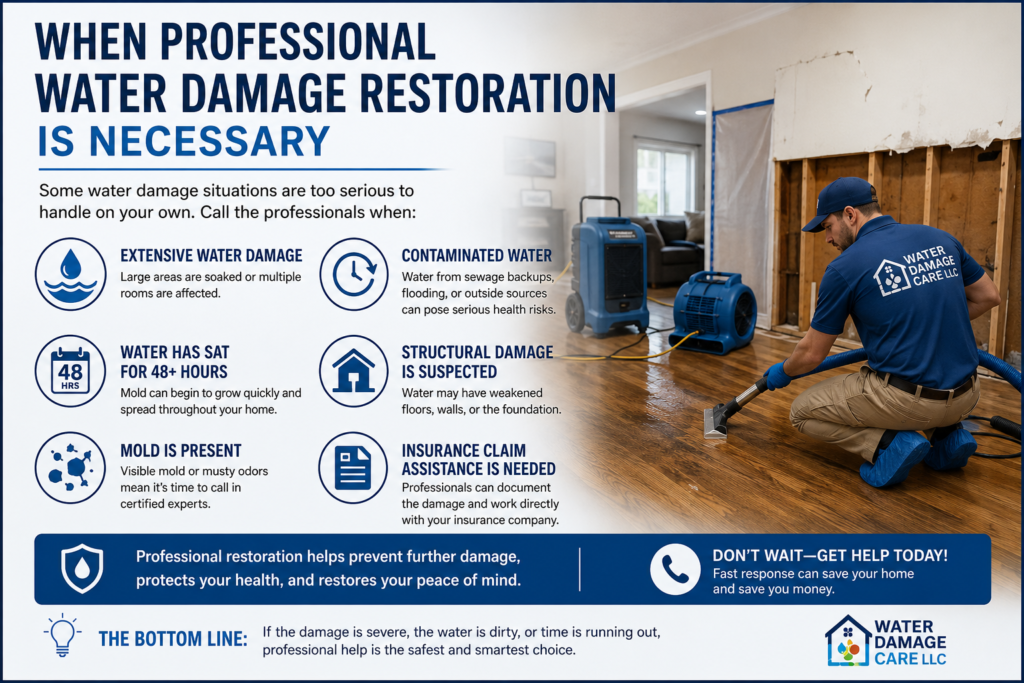
Minor spills and small leaks may sometimes be manageable without professional help, but larger water damage situations often require specialized drying equipment and moisture detection tools.
Hidden moisture is one of the biggest reasons professional restoration becomes necessary. Even when surfaces appear dry, water may remain trapped inside walls, flooring systems, and insulation.
Professional restoration teams are trained to identify these hidden issues before they become larger structural or mold problems.
Signs You Need Professional Help
Some warning signs indicate the damage may be more serious than it initially appears.
Professional restoration may be necessary if you notice:
- large areas of standing water
- strong musty odors
- bubbling paint or drywall
- warped flooring
- ceiling stains
- visible mold growth
- sewage contamination
- recurring moisture problems
Flooded basements and long-term leaks often require advanced drying methods because moisture can spread deep into structural materials.
If the water source is unclear, professional leak detection services may help identify hidden plumbing leaks or moisture intrusion points before repairs begin.
Professional Equipment vs Household Tools
Many homeowners attempt to dry water damage using standard fans or portable dehumidifiers. While these tools may help with small surface moisture, they are often not strong enough for deeper structural drying.
| Household Equipment | Professional Restoration Equipment |
|---|---|
| Basic fans | Industrial air movers |
| Small dehumidifiers | Commercial dehumidification systems |
| Visual inspection | Moisture meters & thermal imaging |
| Surface drying only | Deep structural drying |
| Limited airflow control | Controlled drying environments |
Professional drying systems are designed to:
- reduce humidity levels
- increase evaporation
- monitor moisture content
- dry hidden structural cavities
- prevent secondary damage
Professional structural drying and dehumidification methods are especially important after significant flooding or prolonged water exposure.
How Professionals Prevent Long-Term Damage
Water damage restoration is not only about removing visible water. The larger goal is preventing future structural issues, hidden moisture problems, and mold growth.
Professional mitigation processes focus on:
- moisture detection
- controlled drying
- contamination prevention
- material preservation
- indoor air quality improvement
Early mitigation often reduces the need for major reconstruction later.
Moisture Detection and Monitoring
Hidden moisture is one of the most difficult parts of water damage recovery. Walls, insulation, flooring systems, and framing may remain damp long after visible water disappears.
Professional restoration teams use:
- moisture meters
- thermal imaging cameras
- humidity monitoring equipment
- moisture mapping techniques
These tools help identify damp areas that may otherwise go unnoticed.
Professional moisture monitoring is especially important after:
- slow leaks
- storm flooding
- appliance failures
- basement flooding
- roof leaks
Monitoring moisture levels throughout the drying process helps ensure materials reach safe drying standards before repairs begin.
Structural Drying Process
Structural drying is a controlled process designed to remove moisture from affected building materials safely and efficiently.
This process may include:
- industrial air movers
- dehumidification systems
- humidity control
- airflow management
- material moisture testing
Without proper drying, trapped moisture may continue damaging the property even after visible water is removed.
Drying structural materials correctly can help preserve:
- drywall
- wood framing
- flooring systems
- cabinetry
- insulation
Professional drying also reduces the likelihood of future mold growth and odor problems.
Basement Flood Recovery Considerations
Basements are especially vulnerable to water damage because moisture naturally moves downward into lower levels of a structure.
Flooded basements may experience:
- foundation moisture intrusion
- hidden wall cavity moisture
- flooring damage
- persistent humidity
- mold growth risks
Basement flooding should never be underestimated because moisture can remain trapped for long periods in enclosed lower-level spaces.
Professional basement flood cleanup services often include:
- water extraction
- structural drying
- dehumidification
- moisture inspection
- odor control
Addressing basement moisture quickly helps reduce long-term structural concerns and indoor air quality issues.
How to Reduce Future Water Damage Risks
Although not every water damage event can be prevented, regular maintenance and early inspections can reduce the likelihood of serious flooding and hidden moisture problems.
Routine Home Inspections
Checking the property regularly may help identify small problems before they become major restoration issues.
Important areas to inspect include:
- plumbing connections
- appliance hoses
- water heaters
- roofing materials
- windows and seals
- basement walls
- crawl spaces
Early leak detection often prevents extensive structural damage later.
Plumbing Maintenance Tips
Plumbing failures are one of the leading causes of residential water damage.
Helpful prevention steps include:
- replacing worn hoses
- monitoring water pressure
- checking for corrosion
- inspecting shut-off valves
- repairing small leaks quickly
Even slow leaks can create hidden moisture problems over time.
Basement Waterproofing Considerations
Basements are commonly affected by groundwater intrusion and excess humidity.
Waterproofing improvements may include:
- sump pumps
- drainage systems
- foundation sealing
- gutter maintenance
- downspout extensions
Reducing moisture around the foundation can help lower basement flooding risks during storms and heavy rainfall.
Monitoring Humidity Levels Indoors
Indoor humidity plays a major role in mold prevention and moisture control.
High humidity may cause:
- condensation
- musty odors
- mold growth
- material deterioration
Using dehumidifiers and maintaining proper ventilation may help keep indoor moisture levels under control throughout the year.
FAQs
How fast can water damage become serious?
Water damage can begin affecting drywall, flooring, and insulation within hours, while mold may start developing within 24–48 hours.
Can I clean up water damage myself?
Small spills may be manageable, but larger flooding or hidden moisture often requires professional drying and moisture monitoring.
Is it safe to stay in a house with water damage?
It depends on the severity. Electrical hazards, mold growth, and contaminated water may create unsafe indoor conditions.
What should I avoid doing after flooding?
Avoid using electrical appliances near wet areas, delaying cleanup, or assuming surfaces are fully dry without inspection.
Can water damage spread behind walls?
Yes, moisture can travel through drywall, insulation, and subfloors even when visible surfaces appear dry.
Does water damage always cause mold?
Not always, but untreated moisture significantly increases the risk of mold growth and indoor air quality problems.
When should I call a water damage professional?
Professional help is recommended for standing water, basement flooding, mold odors, sewage contamination, or hidden moisture concerns.
Conclusion
Understanding what should i not do after water damage can help prevent costly repairs, mold growth, and long-term structural problems. Avoiding common mistakes like delaying cleanup, ignoring hidden moisture, or using unsafe drying methods is essential for protecting your home and indoor air quality. Fast action, proper drying, and professional inspection when necessary can significantly reduce damage and support a safer recovery process.
References
- The Institute of Inspection Cleaning and Restoration Certification (IICRC) establishes industry standards and best practices for professional water damage restoration and cleaning procedures. IICRC Official Website
- The Environmental Protection Agency (EPA) provides guidance on mold prevention, indoor air quality, and moisture-related health concerns after flooding and water damage. EPA Official Website
- The Federal Emergency Management Agency (FEMA) offers flood recovery recommendations, emergency preparedness resources, and disaster safety information for homeowners. FEMA Official Website