Fire damage affects far more than the areas touched directly by flames. Smoke, soot, heat, and even water used to extinguish the fire can spread throughout the property within minutes. Many homeowners focus only on visible burn damage, but hidden contamination and structural problems often continue developing long after the fire is out.
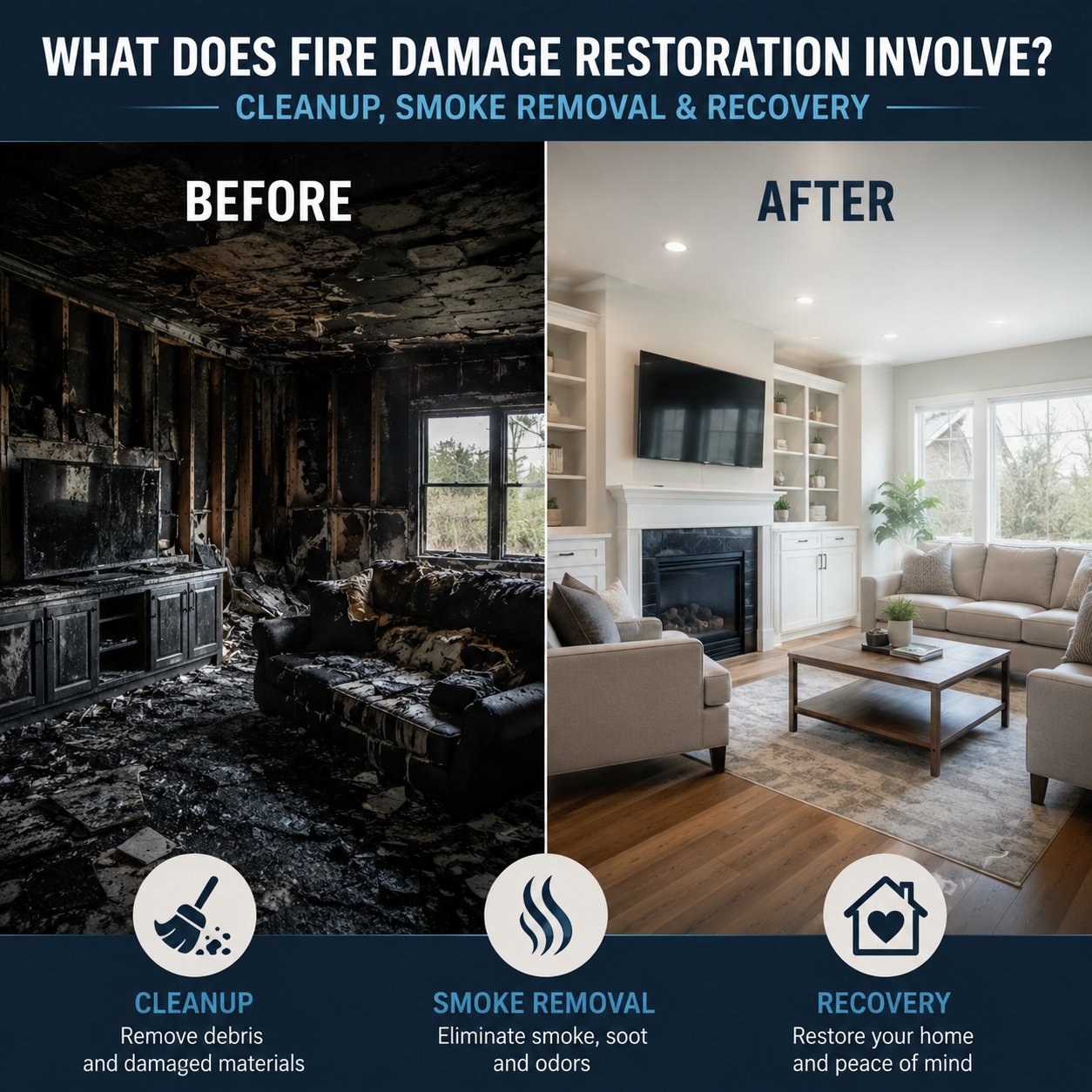
Understanding what does fire damage restoration involve helps property owners know why professional cleanup and restoration are necessary after a fire. The process typically includes emergency stabilization, debris removal, smoke cleanup, odor treatment, structural cleaning, and restoring damaged materials to safe conditions.
Why Fire Damage Restoration Is Necessary
Fire damage restoration is not only about repairing burned materials. Fires create multiple layers of damage that can affect indoor air quality, structural stability, and the overall safety of the property.
Smoke particles can spread through:
- walls
- insulation
- flooring
- air ducts
- furniture
- electrical systems
At the same time, water used during firefighting efforts may soak drywall, flooring, and structural materials, creating additional moisture-related concerns.
Without proper restoration, hidden smoke residue and moisture can continue causing damage long after the initial fire event.
How Fire and Smoke Damage Spread Through a Property
Smoke spreads quickly because tiny particles travel through the air and settle on surfaces throughout the home. Even rooms far away from the main fire area may develop smoke contamination and odor problems.
Fire damage often includes:
- soot staining
- lingering smoke odors
- corrosion of metal surfaces
- discoloration of walls and ceilings
- HVAC contamination
- weakened building materials
Smoke particles may also penetrate porous materials such as drywall, insulation, carpeting, and upholstery. Once trapped inside these materials, odors can remain for long periods if not treated correctly.
Professional Fire and Smoke Damage Mitigation services help reduce secondary damage by addressing smoke contamination, soot residue, and moisture problems as quickly as possible after the fire.
Hidden Damage Homeowners Often Miss
One of the biggest challenges after a fire is identifying hidden damage. Some problems are not immediately visible but may continue affecting the property over time.
For example:
- soot particles may remain inside ventilation systems
- moisture can become trapped behind walls
- smoke residue may continue damaging electronics
- acidic soot can corrode surfaces over time
Indoor air quality is another major concern after a fire. Fine smoke particles may remain suspended in the air and settle repeatedly onto surfaces if the property is not cleaned properly.
Lingering contamination can also trigger:
- respiratory irritation
- strong odors
- allergy-like symptoms
- eye irritation
Professional inspections help identify hidden fire, smoke, and moisture damage before conditions worsen.
What Happens Immediately After a Fire?
The first stage of restoration focuses on safety, stabilization, and preventing additional damage. Fire-damaged properties are often exposed to weather, moisture intrusion, and structural instability immediately after the incident.
Quick emergency response is important because delays may allow:
- smoke residue to spread further
- odors to become stronger
- moisture damage to worsen
- structural materials to weaken further
Restoration professionals typically begin with a complete inspection before starting cleanup and mitigation procedures.
Emergency Property Stabilization
After a fire, some areas of the property may become unsafe due to weakened materials, broken windows, roof openings, or exposed structural components.
Emergency stabilization may include:
- securing entry points
- covering damaged roofing
- isolating unsafe areas
- preventing weather exposure
- reducing additional contamination
These steps help protect the property from further deterioration while restoration planning begins.
Professional Emergency Board-Up and Roof Tarp services are commonly used to secure damaged structures after fires, storms, or major accidents. Temporary protection helps reduce additional water intrusion and protects exposed areas from outside conditions.
Initial Damage Inspection and Assessment
A detailed inspection is one of the most important parts of the fire restoration process. Restoration teams evaluate the extent of:
- fire damage
- smoke contamination
- soot residue
- water damage
- structural instability
The inspection process may also identify:
- hidden smoke penetration
- unsafe electrical systems
- weakened framing
- damaged insulation
- contamination inside HVAC systems
Restoration professionals often use specialized equipment to measure moisture levels and identify areas affected by firefighting water.
Accurate assessment helps create a proper restoration plan while also supporting insurance documentation and repair estimates.
Debris Removal and Property Cleanup
Once the property is stabilized, restoration crews begin removing damaged debris and unsafe materials from the affected areas. Burned materials can continue releasing smoke odors and contaminants if they remain inside the structure for too long.
Removing heavily damaged materials also improves:
- safety
- air quality
- cleanup efficiency
- drying conditions
- restoration access
Fast cleanup is important because soot and smoke residue can continue spreading throughout the property over time.
Removing Burned Materials Safely
Not every material can be restored after severe fire damage. Some items may become permanently damaged due to heat exposure, smoke contamination, or water saturation.
Common materials removed during restoration include:
- burned drywall
- insulation
- damaged flooring
- charred wood
- contaminated furniture
- unsalvageable contents
Restoration teams carefully separate salvageable materials from non-restorable items during the cleanup process.
Professional Debris Removal services help safely dispose of damaged materials while reducing contamination risks inside the property.
Why Fast Debris Removal Matters
Delaying debris removal can make restoration more difficult and increase long-term odor problems. Burned materials may continue releasing soot particles and smoke smells into the air even after the fire has been extinguished.
Fast debris removal helps:
- improve indoor air quality
- reduce lingering odors
- create safer working conditions
- prevent contamination spread
- support faster restoration progress
Quick cleanup also helps restoration professionals access hidden areas that may contain moisture or structural damage.
Removing damaged materials early allows the drying and cleaning process to begin more effectively.
Smoke and Soot Removal Process
Smoke and soot cleanup is one of the most important parts of fire damage restoration. Soot residue can spread throughout the property and continue damaging surfaces if not removed properly.
Different fires produce different types of soot depending on:
- materials burned
- oxygen levels
- fire temperature
- smoke density
Because soot particles are often acidic, they may permanently stain or corrode surfaces if cleanup is delayed.
Different Types of Soot Damage
Not all soot behaves the same way. Restoration professionals use different cleaning methods depending on the type of fire residue present inside the property.
| Type of Soot | Common Source | Restoration Challenge |
|---|---|---|
| Wet soot | Low-oxygen fires | Sticky and difficult to clean |
| Dry soot | Fast-burning fires | Fine powder spreads easily |
| Protein residue | Kitchen fires | Strong invisible odors |
| Fuel oil soot | Furnace puff-backs | Heavy greasy contamination |
Different soot types may affect:
- walls
- ceilings
- fabrics
- flooring
- electronics
- HVAC systems
Proper identification helps restoration teams choose safe and effective cleaning methods.
Professional Smoke Cleanup Methods
Professional smoke cleanup involves more than wiping visible soot from surfaces. Smoke particles often settle deep inside porous materials and ventilation systems.
Restoration professionals may use:
- HEPA vacuum systems
- air scrubbers
- dry-cleaning sponges
- specialized soot removers
- controlled ventilation systems
Professional Soot and Smoke Removal processes are designed to reduce contamination while improving indoor air quality after a fire.
Fast smoke cleanup is important because lingering residue may continue causing staining, corrosion, and odor problems if left untreated for extended periods.
How Smoke Odors Are Removed
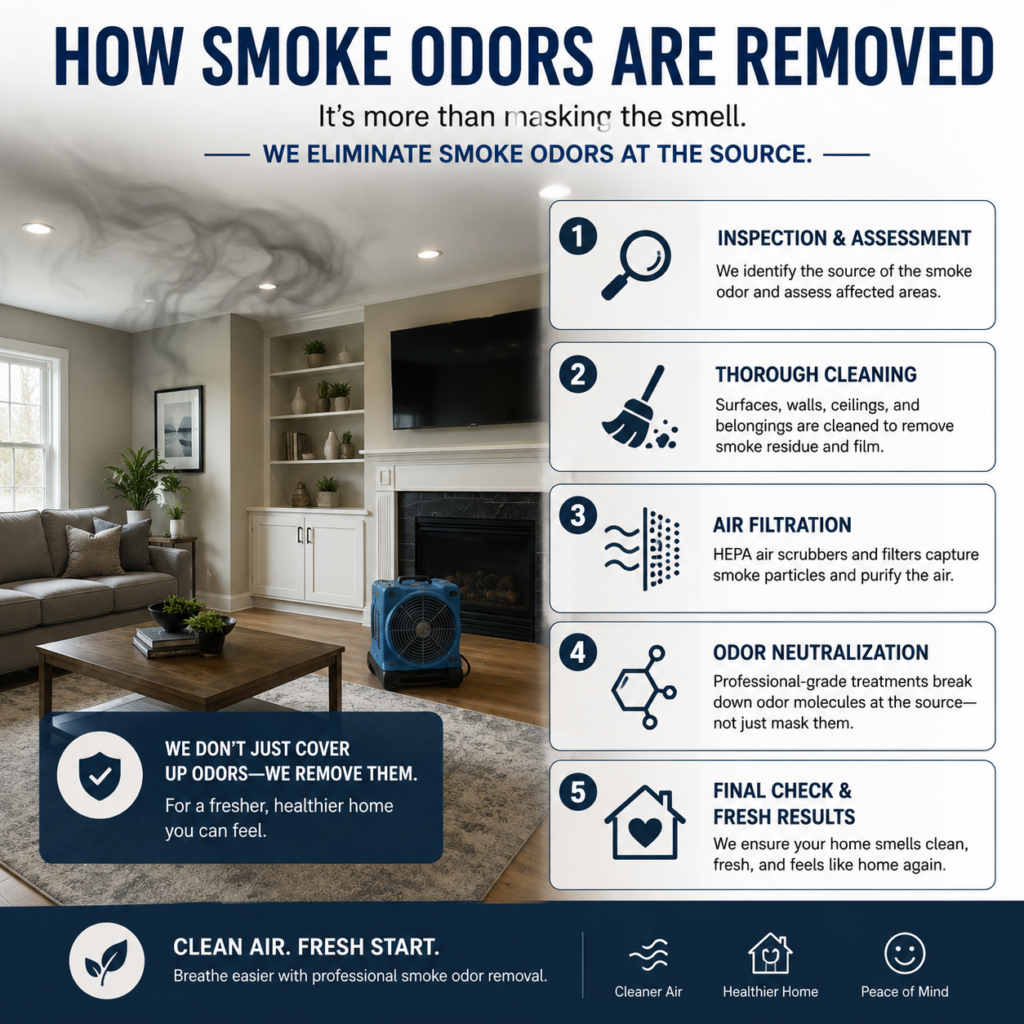
Smoke odors are one of the most difficult problems after a fire because smoke particles can penetrate deeply into porous materials. Even after visible soot is cleaned, lingering odors may remain trapped inside walls, insulation, carpeting, furniture, and ventilation systems.
The smell of smoke often spreads farther than the fire itself. This happens because microscopic smoke particles travel through the air and settle throughout the property during the fire event.
Without proper deodorization, smoke odors may continue affecting:
- indoor air quality
- comfort levels
- furniture and fabrics
- HVAC systems
- living spaces
Professional odor removal focuses on eliminating odor particles rather than simply covering up smells temporarily.
Why Smoke Odors Linger
Smoke odors remain because tiny particles settle deep into materials during the fire. Heat from the fire opens pores in many surfaces, allowing smoke residue to penetrate further into walls, ceilings, wood, and fabrics.
Common odor-absorbing materials include:
- carpeting
- drywall
- upholstery
- insulation
- curtains
- wooden surfaces
Smoke contamination inside HVAC systems may also continue circulating odors throughout the property long after the fire has been extinguished.
The longer smoke residue remains untreated, the more difficult odor removal may become. Some odors may continue returning repeatedly if hidden smoke particles are left behind during cleanup.
Professional Deodorization Techniques
Professional restoration companies use specialized deodorization methods designed to neutralize odor particles at their source.
Common odor removal methods include:
- thermal fogging
- ozone treatment
- hydroxyl generators
- air scrubbing systems
- HEPA filtration
These systems help treat smoke contamination in both visible and hidden areas throughout the structure.
Professional Odor Control and Deodorization services are often necessary after significant fires because household air fresheners and surface cleaning products typically cannot remove deeply embedded smoke odors.
Proper deodorization also helps improve indoor air quality and create a safer living environment after restoration.
Structural Cleaning and Surface Restoration
After debris removal and smoke cleanup, restoration teams begin cleaning salvageable structural materials and surfaces. Fire residue can continue damaging materials over time if it is not properly removed.
Soot particles are often acidic and may:
- stain surfaces
- discolor walls
- corrode metal
- damage electronics
- weaken materials
Structural cleaning focuses on restoring as many materials as possible while reducing long-term deterioration.
Cleaning Walls, Ceilings, and Flooring
Different materials require different cleaning techniques depending on the severity of the fire and the type of soot present.
Restoration professionals may clean:
- drywall surfaces
- ceilings
- tile flooring
- hardwood flooring
- cabinetry
- countertops
Specialized cleaning products are used to remove soot residue without spreading contamination further across surfaces.
Cleaning must be performed carefully because aggressive scrubbing may push soot deeper into porous materials and worsen staining.
Professional Structural Cleaning services help restore affected surfaces while protecting salvageable parts of the property from further damage.
Salvaging Restorable Materials
Not every fire-damaged material needs complete replacement. In some situations, professional restoration can save materials that appear heavily affected at first glance.
Salvageable items may include:
- hardwood flooring
- furniture
- structural framing
- tile surfaces
- metal fixtures
- certain contents
The decision to restore or replace materials depends on:
- heat exposure
- smoke contamination
- structural integrity
- odor penetration
- safety concerns
Restoration professionals evaluate materials carefully before determining whether repairs are possible.
Preventing Long-Term Corrosion Damage
Smoke residue may continue damaging surfaces even after the fire is over. Acidic soot can corrode:
- metal fixtures
- appliances
- wiring
- plumbing components
- electronic devices
Corrosion damage often worsens over time if cleanup is delayed. Fast restoration helps reduce permanent damage to structural and mechanical systems inside the property.
Moisture from firefighting efforts may also accelerate corrosion and deterioration, especially in humid indoor environments.
Water Damage After Firefighting Efforts
Many homeowners are surprised to learn that fire damage restoration often includes water damage cleanup as well. Large amounts of water used during firefighting can soak structural materials throughout the property.
This additional moisture may affect:
- drywall
- insulation
- flooring
- subfloors
- framing
- ceilings
Without proper drying, water damage may create secondary problems long after the fire itself has been extinguished.
Why Fire Damage Often Includes Water Damage
Fire suppression systems and firefighting hoses release significant amounts of water during emergency response efforts. While necessary for extinguishing flames, this water may spread into unaffected parts of the structure.
Water damage after fires may lead to:
- swelling materials
- warped flooring
- weakened drywall
- hidden moisture pockets
- mold growth risks
Smoke contamination combined with moisture can also create difficult cleanup conditions because wet soot residue may spread more easily across surfaces.
Quick moisture removal is important for reducing additional structural damage.
Drying and Moisture Control
Professional drying equipment is commonly used after fires to remove moisture trapped inside structural materials.
The drying process may include:
- industrial air movers
- dehumidifiers
- moisture monitoring
- controlled airflow systems
- humidity management
Proper moisture control helps prevent:
- mold growth
- material deterioration
- odor problems
- hidden structural damage
Drying affected areas fully before reconstruction begins is an important part of the restoration process.
Mold Prevention After Fire Suppression
Mold growth becomes a serious concern when moisture remains trapped inside the property after firefighting efforts.
Warm, humid conditions may allow mold to begin developing within 24–48 hours in some affected materials.
Areas commonly affected include:
- wall cavities
- carpeting
- insulation
- subfloors
- basements
Fast drying and proper ventilation help reduce the likelihood of mold contamination after fire-related water damage.
When Professional Fire Restoration Is Necessary
Minor smoke exposure from small incidents may sometimes be manageable with limited cleanup, but larger fires often require professional restoration due to safety concerns and hidden contamination.
Professional restoration becomes especially important when:
- structural damage is present
- smoke spreads throughout the property
- soot contamination is extensive
- water damage is severe
- odors persist
- HVAC systems are affected
Restoration professionals use specialized equipment and industry-standard procedures designed for complex fire recovery situations.
Safety Risks After a Fire
Fire-damaged structures may contain multiple hazards that are not immediately visible.
Common post-fire safety risks include:
- weakened structural materials
- electrical hazards
- contaminated air
- unstable ceilings
- hidden embers
- exposed wiring
Smoke residue may also contain toxic particles depending on the materials burned during the fire.
Professional inspections help identify unsafe conditions before cleanup and repairs begin.
Equipment Professionals Use
Professional restoration companies use advanced equipment designed specifically for smoke cleanup, deodorization, and structural drying.
| Household Cleaning | Professional Restoration |
|---|---|
| Standard cleaners | Industrial soot removers |
| Basic fans | Commercial air scrubbers |
| Air fresheners | Thermal fogging systems |
| Surface wiping | Deep structural cleaning |
| Portable vacuums | HEPA filtration systems |
Professional equipment helps restore indoor air quality while removing contamination more effectively than standard household tools.
How to Reduce Long-Term Fire Damage Risks
Although fires cannot always be prevented, proper maintenance and fast emergency response may help reduce long-term damage after a fire event.
Fast Emergency Response
Quick mitigation often reduces:
- smoke spread
- odor penetration
- structural deterioration
- corrosion damage
- moisture problems
Emergency stabilization and cleanup are important for limiting secondary damage after a fire.
Proper Ventilation and Air Quality Control
Improving airflow and removing airborne contaminants helps restore safer indoor conditions after smoke exposure.
Air quality management may include:
- air scrubbers
- HEPA filtration
- ventilation systems
- humidity control
Maintaining clean indoor air is an important part of the restoration process.
Routine Electrical and Fire Safety Inspections
Regular inspections may help reduce future fire risks inside residential and commercial properties.
Important areas to inspect include:
- electrical wiring
- overloaded outlets
- heating systems
- smoke detectors
- kitchen appliances
- HVAC systems
Early maintenance can help identify hazards before they become serious fire risks.
FAQs
What does fire damage restoration involve?
Fire damage restoration involves debris removal, smoke and soot cleanup, odor removal, structural cleaning, drying, and repairing damaged areas.
How long does fire damage restoration take?
The timeline depends on the severity of the fire, smoke contamination, and structural damage within the property.
Can smoke damage be completely removed?
Yes, professional cleaning and deodorization methods can remove most smoke residue and lingering odors from affected areas.
Why does smoke smell stay after a fire?
Smoke particles penetrate porous materials like drywall, carpeting, and insulation, causing odors to linger without proper deodorization.
Is water damage common after a fire?
Yes, firefighting efforts often leave behind moisture that can damage walls, flooring, and structural materials.
What equipment is used during fire restoration?
Professionals may use HEPA vacuums, air scrubbers, thermal foggers, dehumidifiers, and specialized soot removal equipment.
Is professional fire restoration necessary after small fires?
Even small fires can leave hidden smoke contamination and odors that may require professional cleaning and inspection.
Conclusion
Understanding what does fire damage restoration involve helps homeowners prepare for the cleanup and recovery process after a fire. Restoration includes much more than repairing burned materials, as smoke, soot, odors, and water damage can continue affecting the property long after the flames are extinguished. Fast response, proper cleaning, and professional restoration methods help improve safety, indoor air quality, and long-term property recovery.
References
- The Institute of Inspection Cleaning and Restoration Certification (IICRC) establishes industry standards and best practices for professional fire and smoke damage restoration. IICRC Official Website
- The Environmental Protection Agency (EPA) provides guidance on indoor air quality, smoke contamination, and post-fire cleanup safety. EPA Official Website
- The Federal Emergency Management Agency (FEMA) offers fire recovery resources, disaster cleanup guidance, and emergency preparedness information. FEMA Official Website